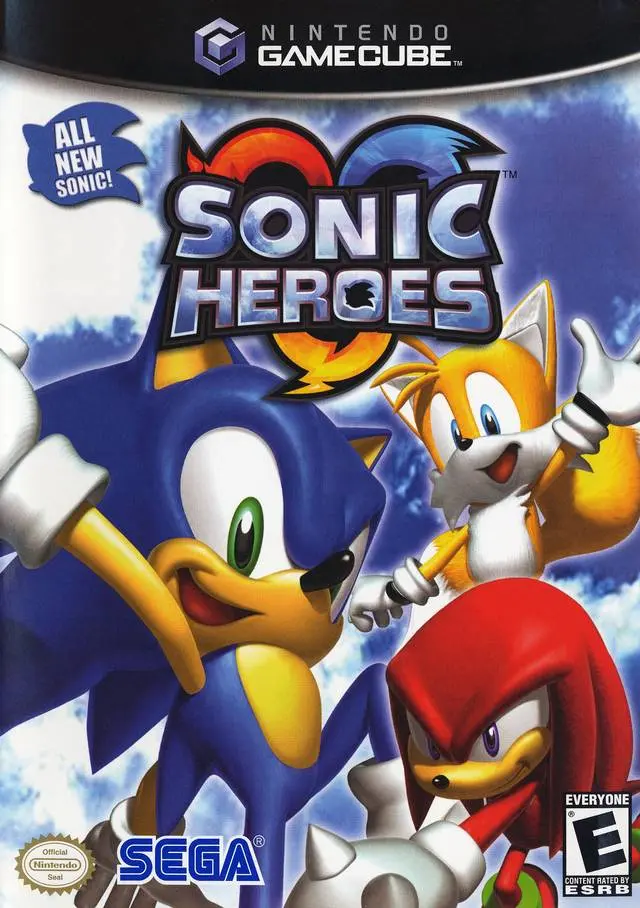
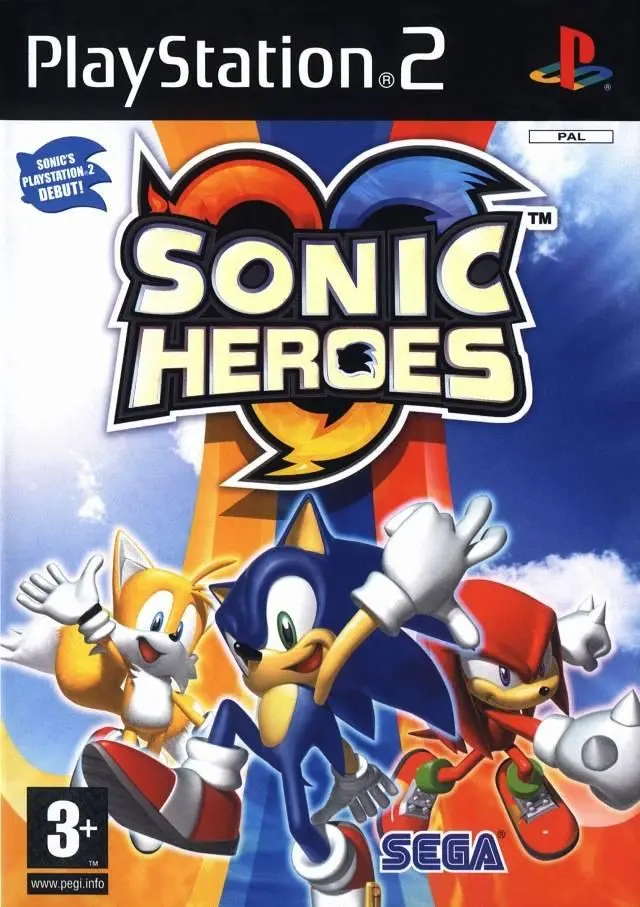
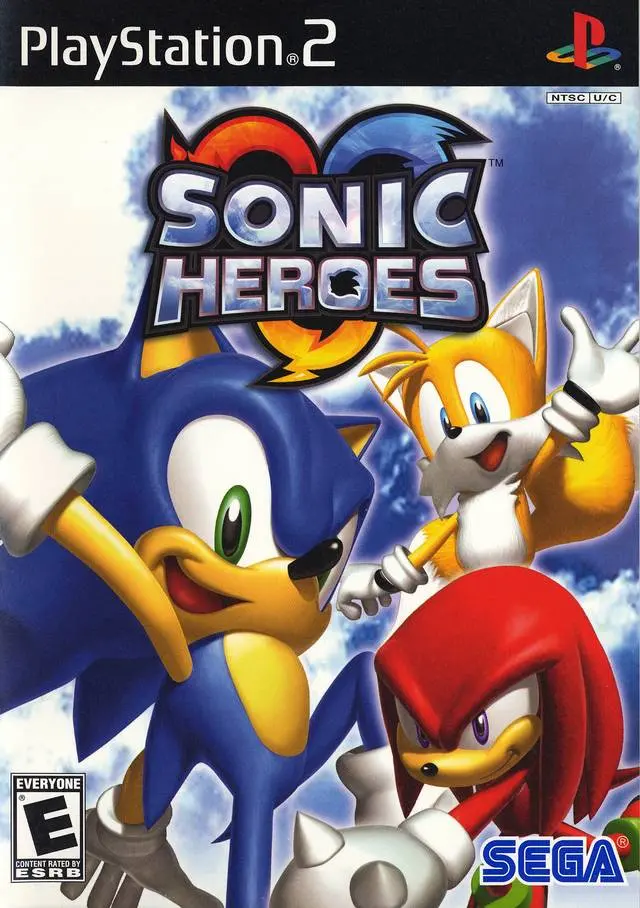
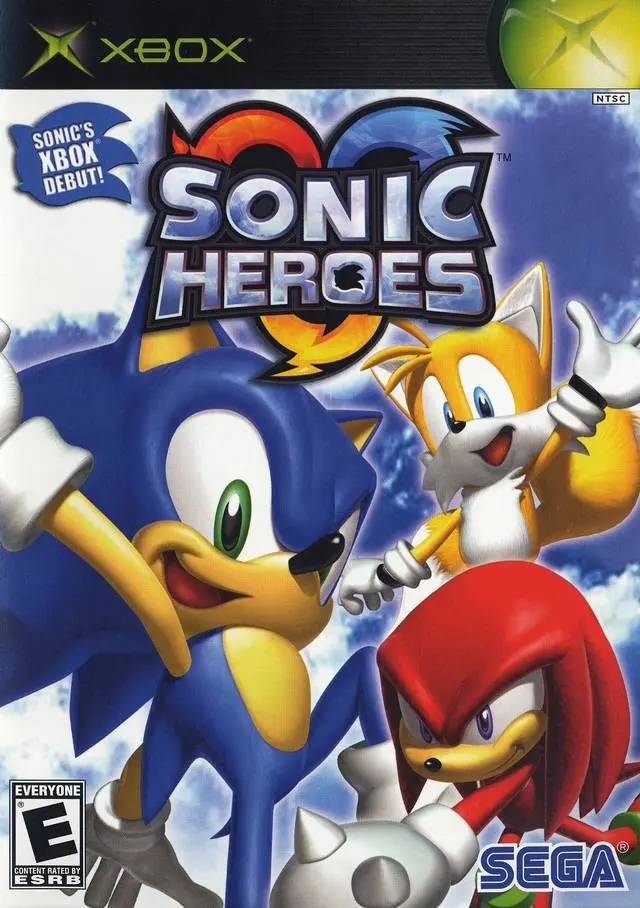
GameCube / PS2 / Xbox / PC2003Sonic Team USA3D action platformer
Sonic Heroes (2003)
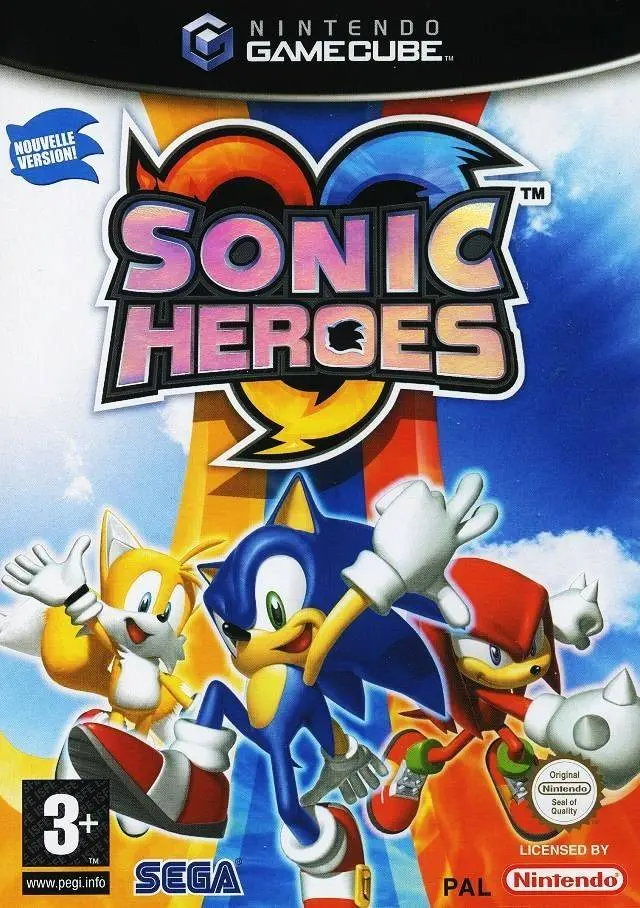
Twelve heroes, four teams and one mysterious Eggman. Sonic’s first game on every console at once swaps solo runs for three-character teamwork and drags the series back towards its loop-the-loop roots.
Released30 Dec 2003 (JP) · Jan 2004 (NA) · Feb 2004 (Europe) · PC: Nov–Dec 2004
DeveloperSonic Team USA
DirectorTakashi Iizuka; producer Yuji Naka
TeamsSonic, Dark, Rose and Chaotix
VillainNeo Metal Sonic, posing as Eggman
SalesAt least 3.41 million
Title
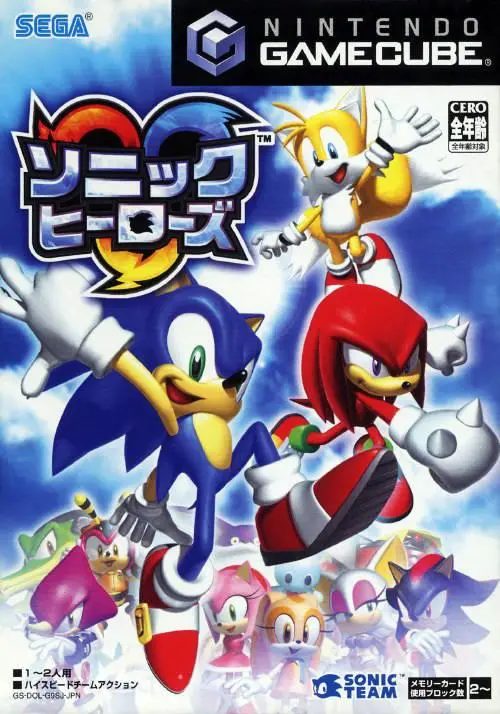
Sonic Heroes; Japanese: ソニックヒーローズ
Platforms
GameCube, PlayStation 2, Xbox, PC (Windows); PlayStation 2 version on PlayStation 3 via PSN (2012)
Developer
Sonic Team USA; CG movies by Vision Scape; audio by Wave Master
Publisher
Sega
Producer
Yuji Naka
Director
Takashi Iizuka (also lead designer)
Scenario
Shiro Maekawa
Art director
Kazuyuki Hoshino
Main programmer
Tetsu Katano
Music
Sound director Jun Senoue; themes by Crush 40, Ted Poley, Tony Harnell, Kay Hanley, Julien-K and Gunnar Nelson
Engine
RenderWare (Criterion Software)
Players
1–2
Released (Japan)
30 December 2003, all three consoles (¥6,980); PC 9 December 2004
Released (North America)
GameCube 6 January 2004; PlayStation 2 and Xbox 27 January 2004 (US$49.95–49.99); PC 16 November 2004 (US$19.95)
Released (Europe)
February 2004 (UK 6 February; Wikipedia gives 2 February); PC 26 November 2004
Released (Australia)
Consoles 6 February 2004 by Sega Retro; PC 26 November 2004 per our original page
Budget editions
Player’s Choice (GameCube), Platinum and Greatest Hits (PlayStation 2), Platinum Hits and Classics (Xbox), from 2004
Sonic Heroes was the moment Sonic went everywhere. Two years after Sega stopped making consoles, it arrived on the GameCube, PlayStation 2 and Xbox together, the first multi-platform Sonic and the first original Sonic game on a non-Sega home console, with a PC version a year later.
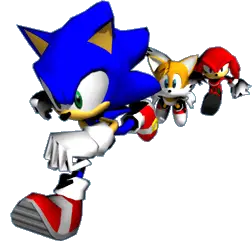
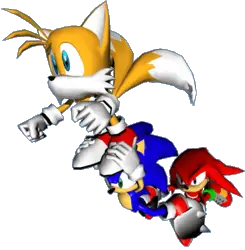
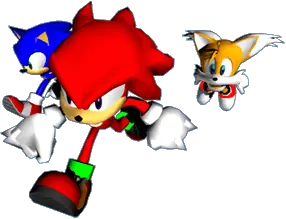
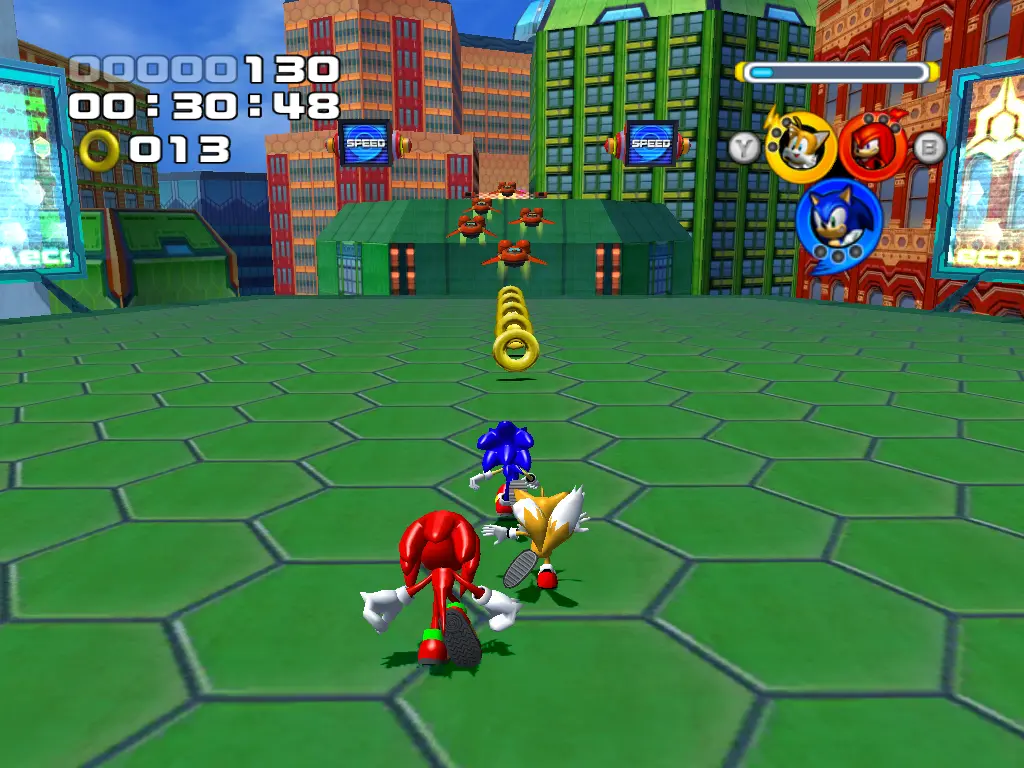
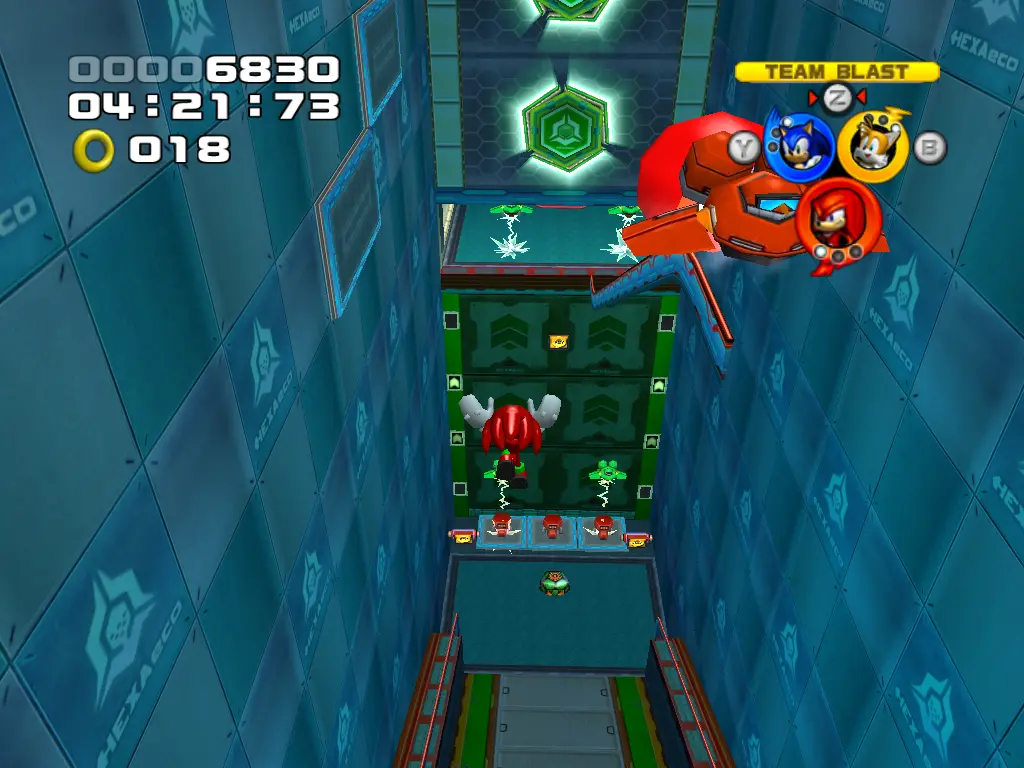
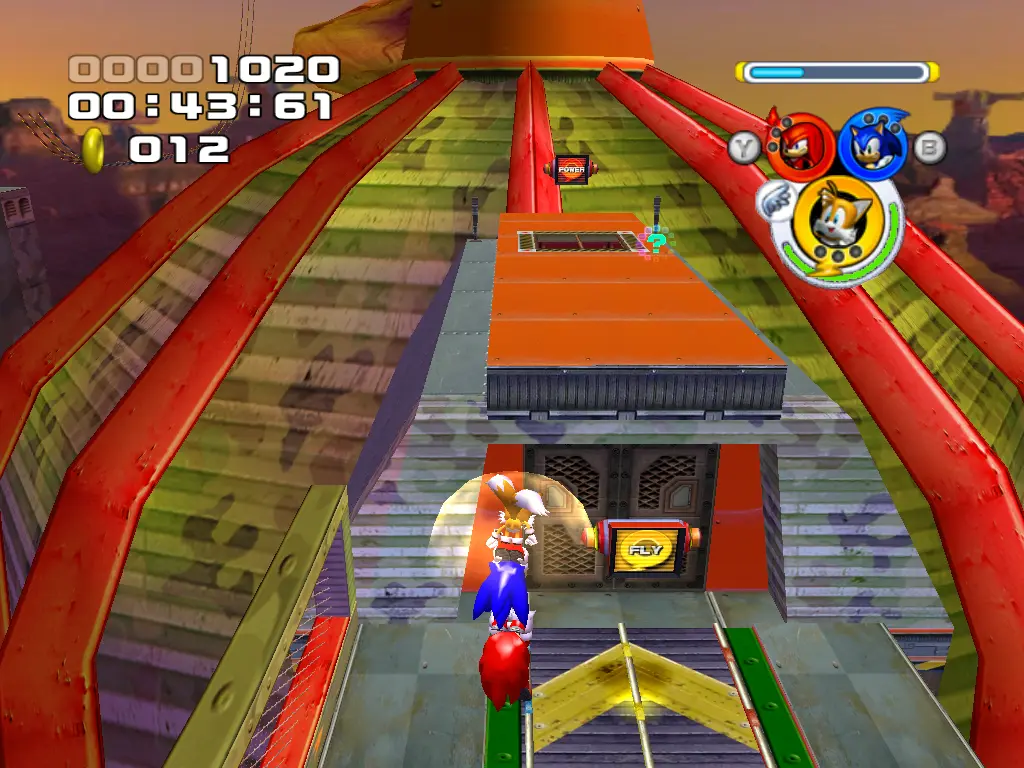
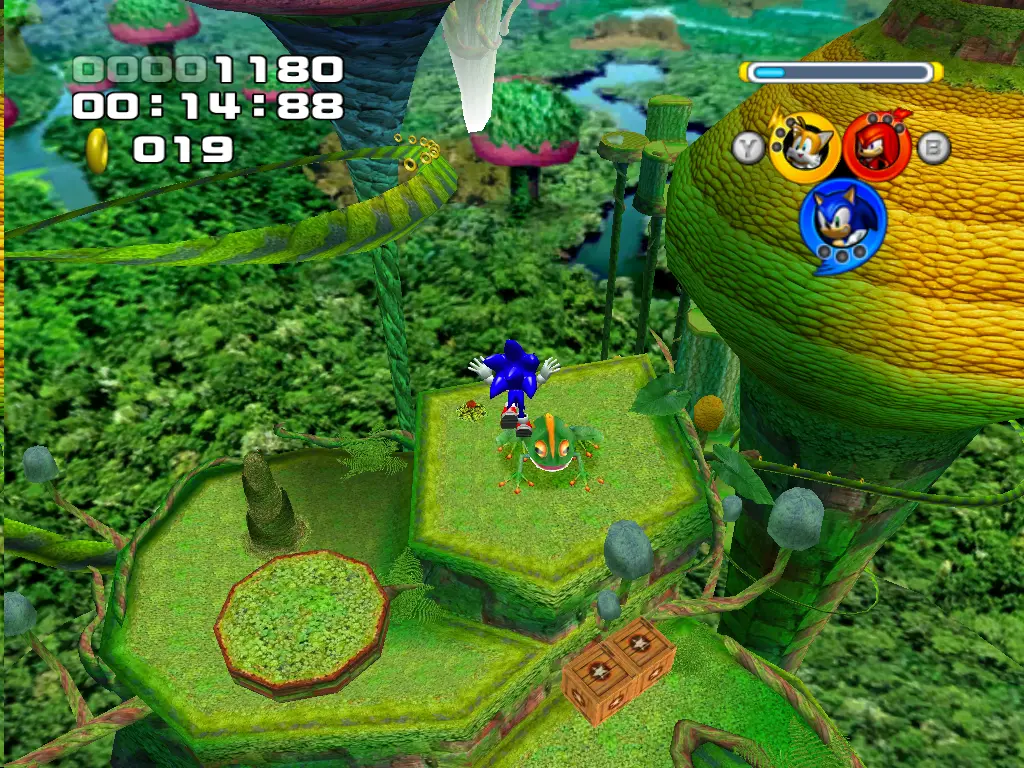
Instead of one hero at a time, you control a team of three and switch the leader on the fly: a Speed character for dashing and homing attacks, a Fly character to lift the team up, and a Power character to smash through. Four teams share the stage list with their own stories and difficulty: Team Sonic, the newly formed Team Dark with Shadow, Rouge and E-123 Omega, the beginner-friendly Team Rose, and Team Chaotix, revived from 1995’s Knuckles’ Chaotix.
Sonic Team USA built it to feel more like the Mega Drive games, with fast, linear stages full of loops and a return for Special Stages. Reviews were mixed, praising the speed, colour and music and grumbling about the camera, the voices and the team gimmick, but players bought it in their millions: it was the best-selling 3D Sonic for almost two decades.
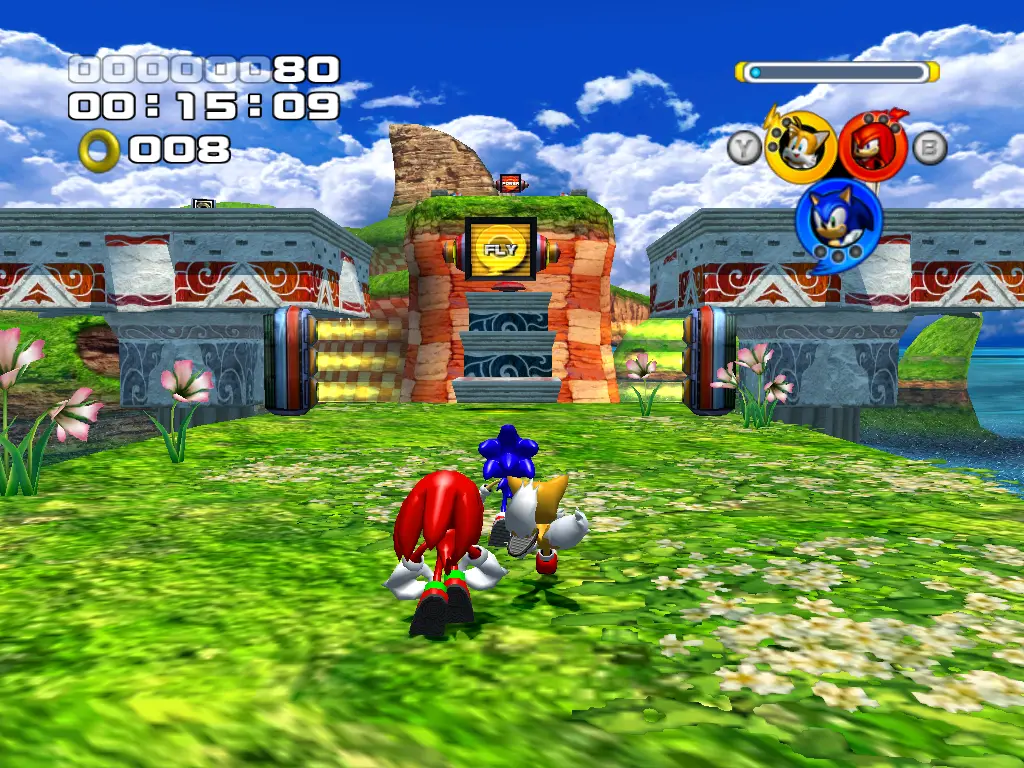
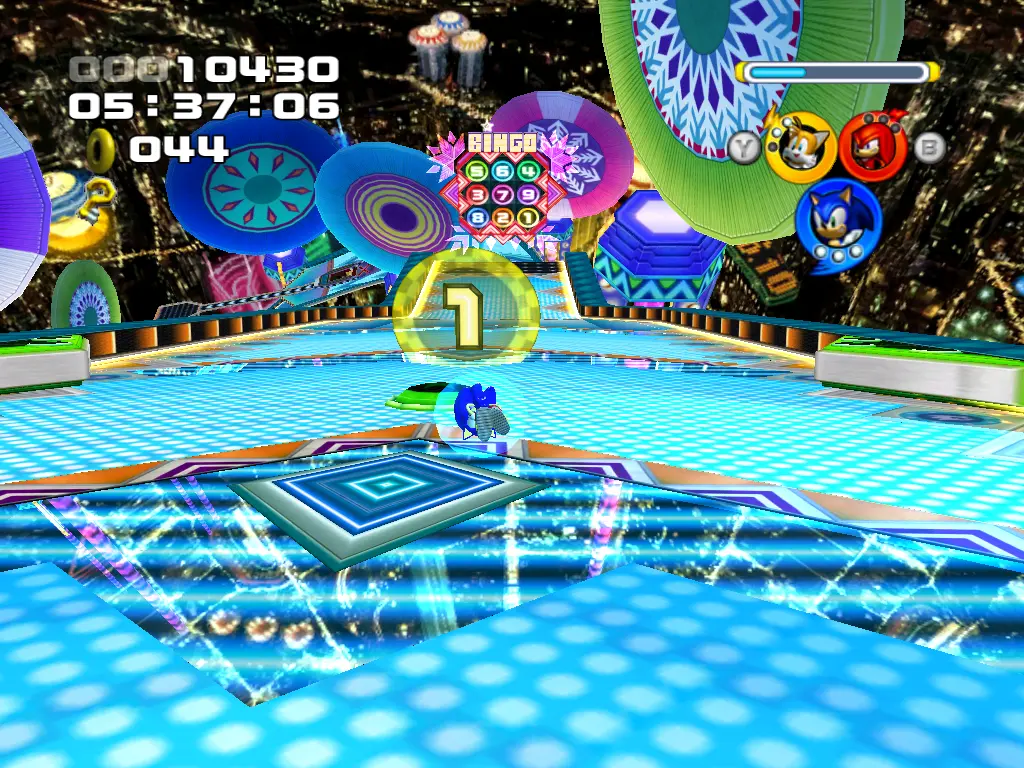
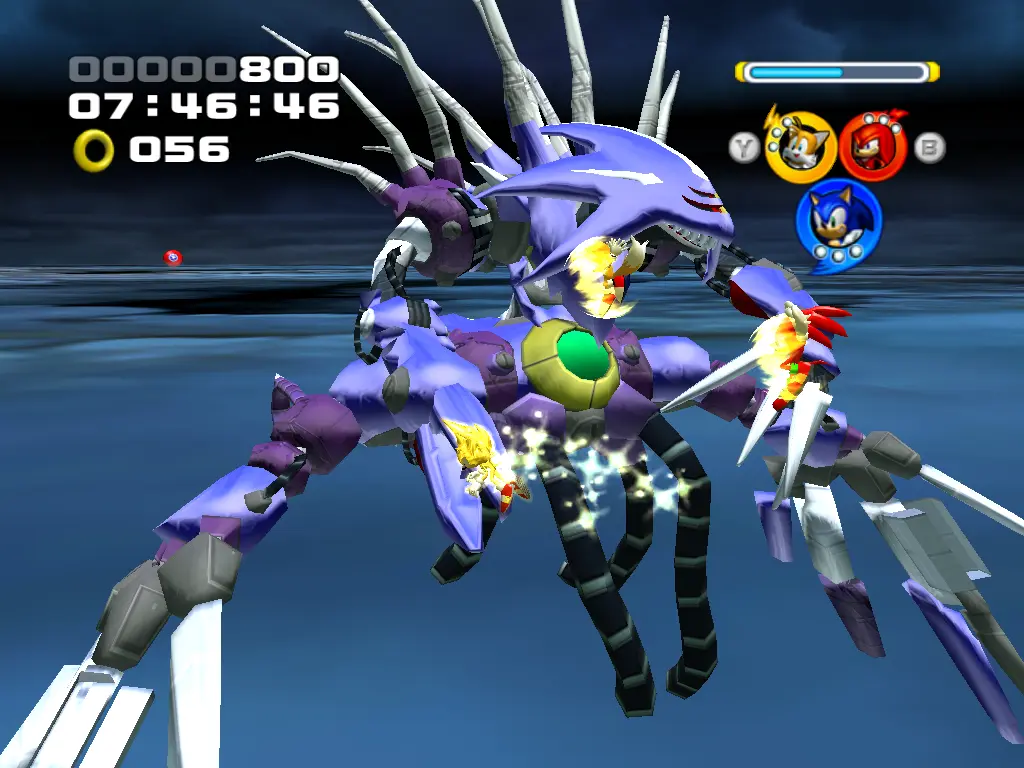
Seaside Hill, the first stage.Bingo Highway, a reviewers’ favourite.Metal Overlord, the final boss.
challenges gamers to control three characters simultaneously
Sega of America’s release announcement for the PlayStation 2 and Xbox versions explained that each character brings speed, power or flight, that several teams follow their own stories across 14 large stages to stop Dr. Eggman, and that seven two-player mini-games add replay value. It also billed the game as the first original Sonic console game in three years, and Sonic’s first appearance on PlayStation 2 and Xbox.
— Official description: Sega of America press release, 27 January 2004, as archived by Sega Retro. One phrase quoted; the rest summarised.
Quick Answers
The short answers, with the detail further down the page.
When did Sonic Heroes come out?
In Japan on 30 December 2003, in North America in January 2004 (GameCube on the 6th, PlayStation 2 and Xbox on the 27th) and in Europe in February 2004. The PC version followed in late 2004. More →
Who are the four teams?
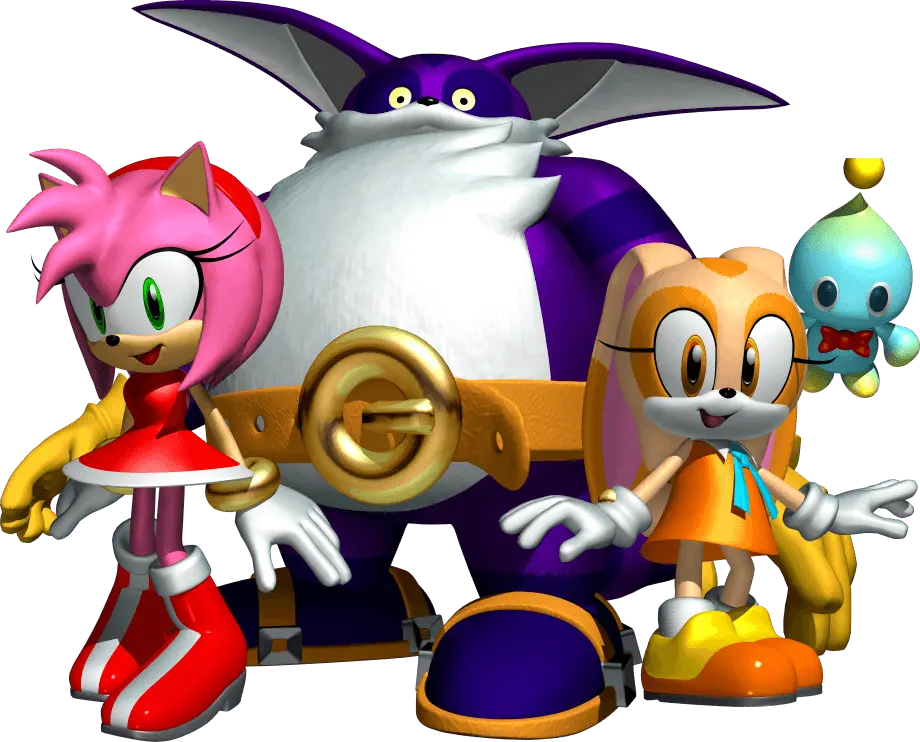
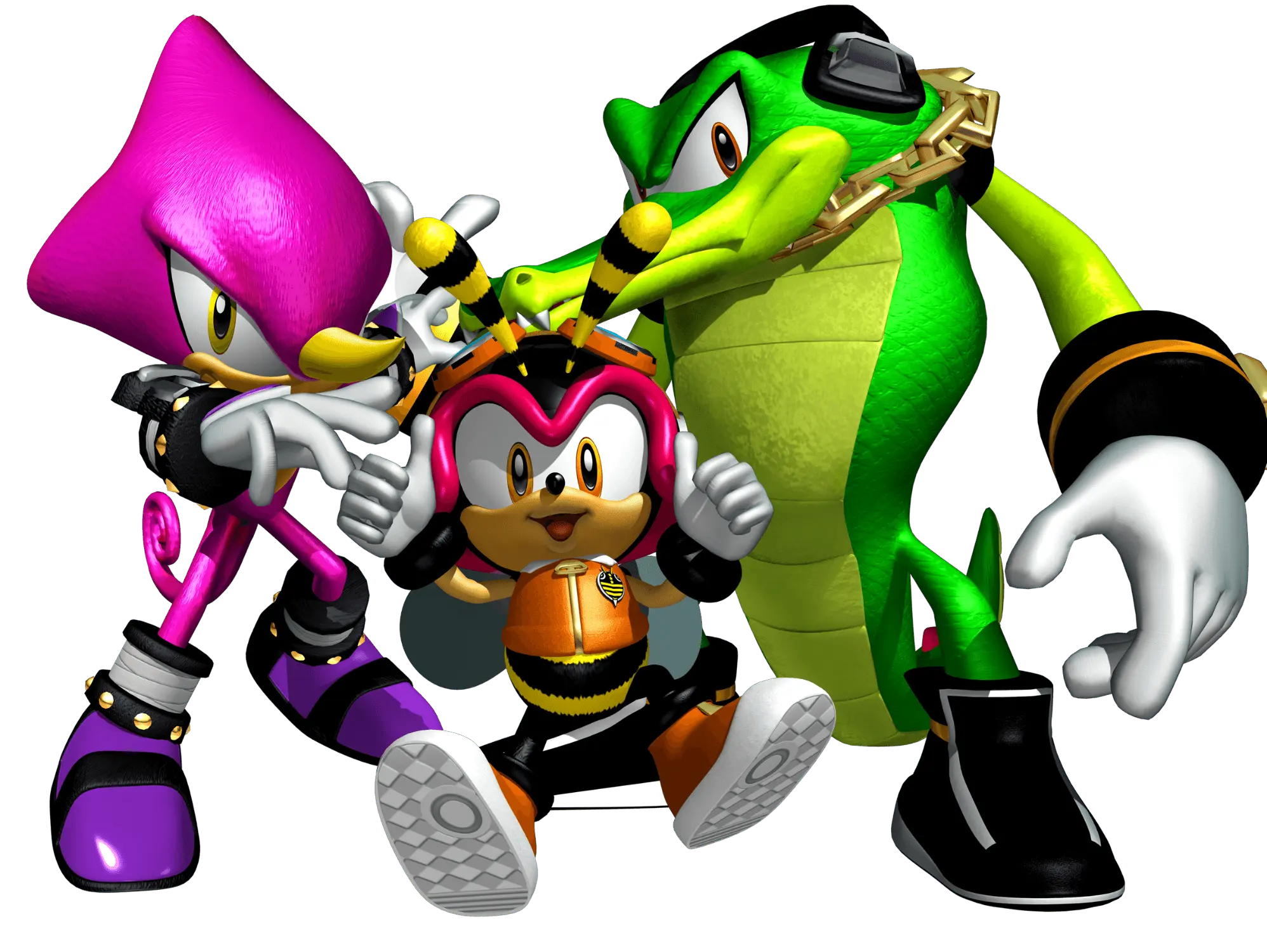
Team Sonic (Sonic, Tails, Knuckles), Team Dark (Shadow, Rouge, E-123 Omega), Team Rose (Amy, Cream with Cheese, Big) and Team Chaotix (Espio, Charmy, Vector). More →
How do formations work?
Whichever character leads sets the formation: Speed for running, homing attacks and light dashes, Fly for gaining height and hitting airborne enemies, Power for smashing obstacles. You switch at any moment, and Power Cores level each character up. More →
Which team should I start with?
Team Rose is designed for beginners and Team Dark for experienced players. Team Chaotix plays the same stages as missions, such as collecting items. More →
Who is the real villain?
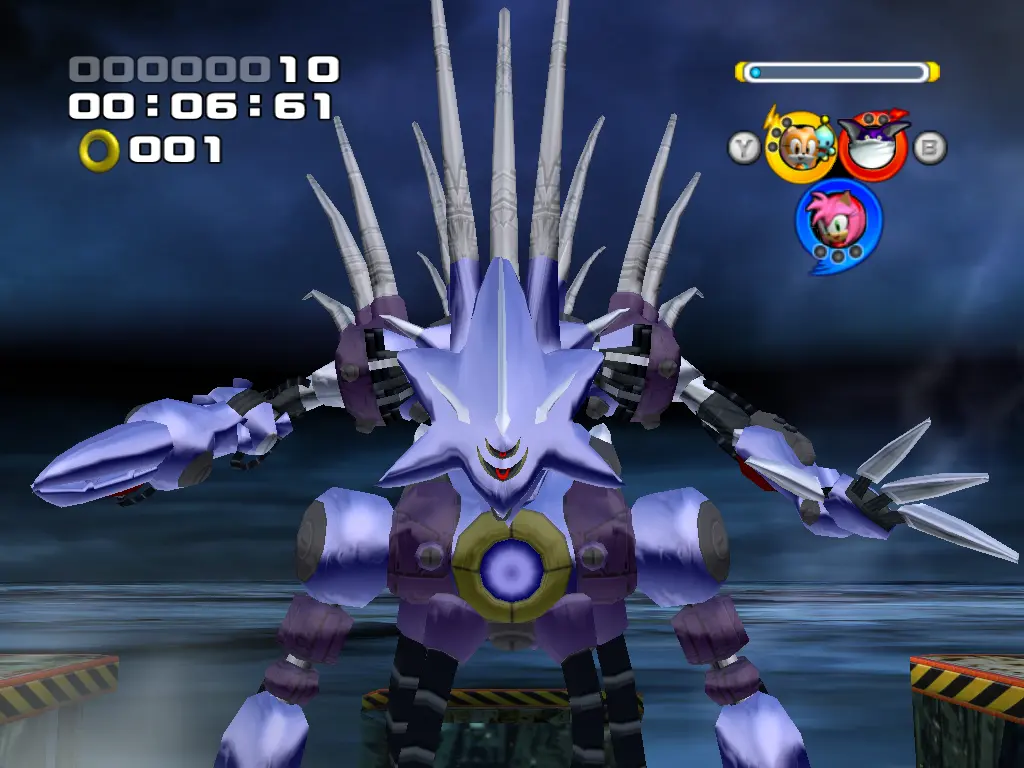
Metal Sonic. Rebuilt as Neo Metal Sonic, he locks Eggman up, impersonates him and copies the abilities of everyone he observes, before becoming Metal Overlord. More →
How do you reach the Last Story?
Finish all four team stories and collect all seven Chaos Emeralds from the Special Stages, reached with a key you must carry to the end of a stage without being hit. More →
Is it the same on every console?
The content is identical, but the PlayStation 2 version runs at 30 frames per second against 60 on GameCube and Xbox. More →
How many copies did it sell?
At least 3.41 million by Sega’s figures, making it the best-selling 3D Sonic game until Sonic Frontiers overtook it in 2023. More →
Plot / Story
Team Dark: Shadow, Rouge and Omega.
Sonic Heroes tells four short stories that overlap on the way to one showdown. Each team has its own reason for chasing Dr. Eggman, and each meets the others along the way, usually in a fight.
Team Sonic
Team Sonic.
A letter from Eggman gives Sonic, Tails and Knuckles three days before he launches his Egg Fleet and takes over the world. The friends take up the challenge happily, never suspecting that the Eggman issuing it is not the real one.
Team Dark
Rouge breaks into one of Eggman’s old bases and finds Shadow, who everyone believed had died falling from the ARK, sleeping inside a capsule, guarded by E-123 Omega, the last of the E-series robots. Waking both, she forms an uneasy alliance: Omega wants revenge on the doctor who locked him away, and Shadow, who cannot remember his past, wants to know who he really is.
Team Rose
Team Rose.
Amy is bored at a resort until she spots Sonic in an advertisement. Cream is looking for Cheese’s brother, Chocola, and Big for his frog, Froggy, and rumour says Sonic has taken both, so the three head off together to find him.
Team Chaotix
Team Chaotix.
The Chaotix Detective Agency is short of money when a package arrives with a walkie-talkie and a job offer from a mysterious client. Vector, Espio and Charmy take the work, completing one odd task after another, and only at the end discover who has been giving the orders.
The Last Story
All four teams converge on the Egg Fleet. Rouge finds a room full of Shadow androids and wonders whether her Shadow is just another copy; Omega reasons that copies need an original. The Chaotix find their client locked in a cell: he is the real Eggman, betrayed by his own creation, Metal Sonic, who has been posing as the doctor all along.
Calling himself Neo Metal Sonic, he has been studying every team and has copied Chaos’ power from Froggy and Chocola, which lets him become Metal Madness and then Metal Overlord. The teams pool the seven Chaos Emeralds, Team Dark buys time, and Sonic becomes Super Sonic, powering up Tails and Knuckles to win the final battle. Afterwards everyone scatters: Sonic flees Amy, Knuckles chases Rouge, and the Chaotix chase Eggman for their fee.
The Egg Emperor.Metal Madness.Metal Overlord.
Stages in Sonic Heroes
Fourteen stages in pairs, each pair built on a classic Sonic theme, with boss fights in between. Every team plays them all, with layouts and goals adjusted to its difficulty.
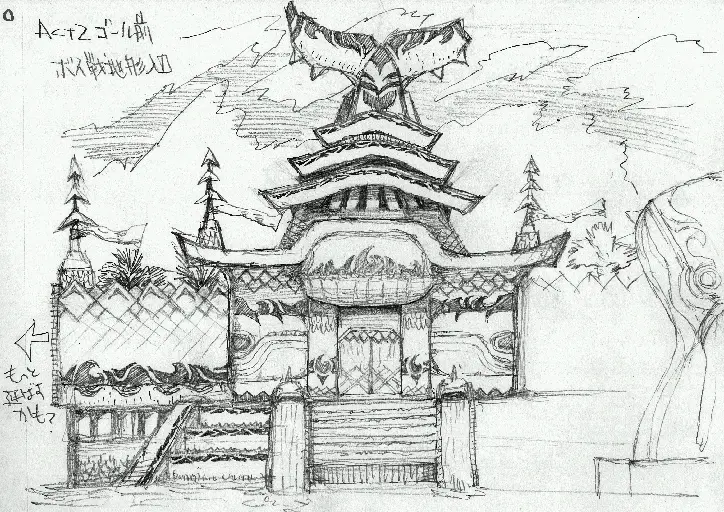
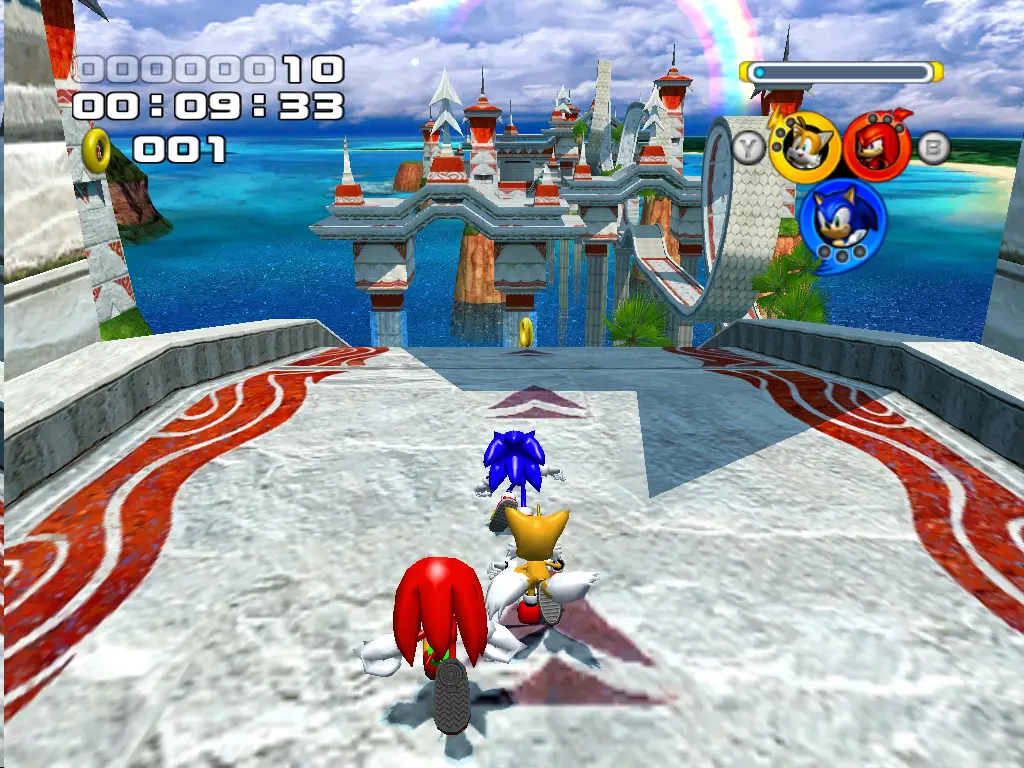
Seaside HillStage 1Palm trees, sand and chequered hills, plus white ruins that loop through the surf. Rebuilt years later in Sonic Generations.
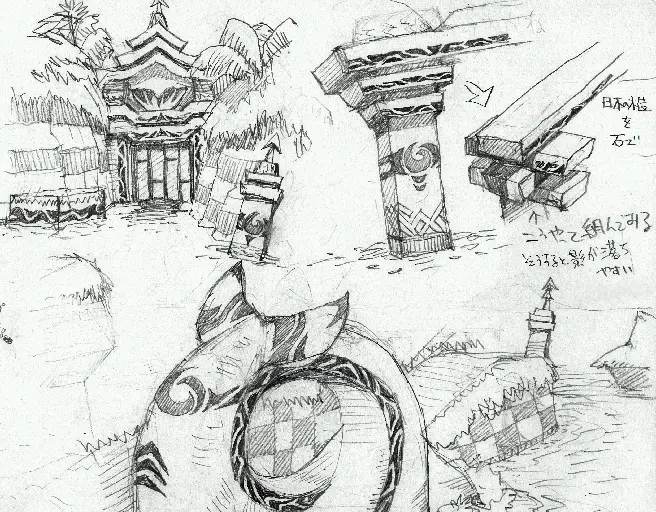
Ocean PalaceStage 2 · then the Egg HawkSpiralling white ruins across the waves off Seaside Hill, with stone doors to punch through and pillars that collapse.
Grand MetropolisStage 3A huge futuristic city that has fallen to “Eggman”.
Power PlantStage 4The giant energy installation that powers Grand Metropolis.
Casino ParkStage 5Pinball and neon; Amy compares it to Casinopolis.
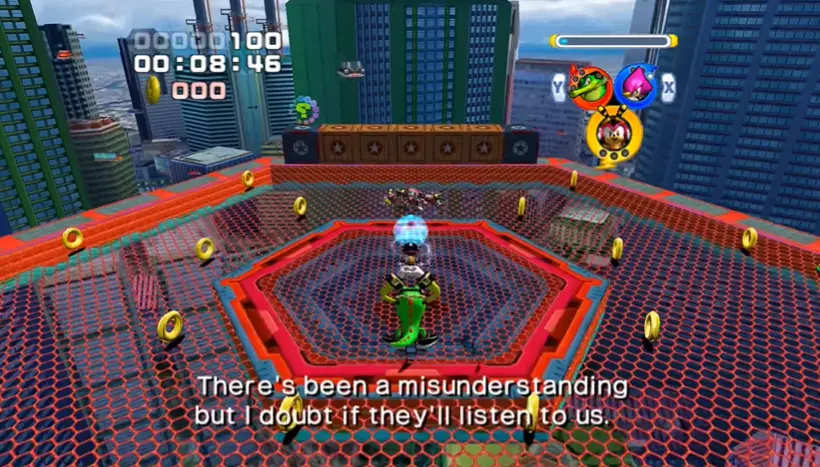
Bingo HighwayStage 6 · then Robot CarnivalA casino road singled out by several reviewers as the game’s highlight.
Rail CanyonStage 7Eggman’s railway canyon; it returned in Sonic X Shadow Generations.
Bullet StationStage 8 · then the Egg AlbatrossEggman’s base in Rail Canyon, where his supply trains end and the Egg Fleet is loaded.
Frog ForestStage 9Giant mushrooms and giant frogs; Knuckles is reminded of his own island.
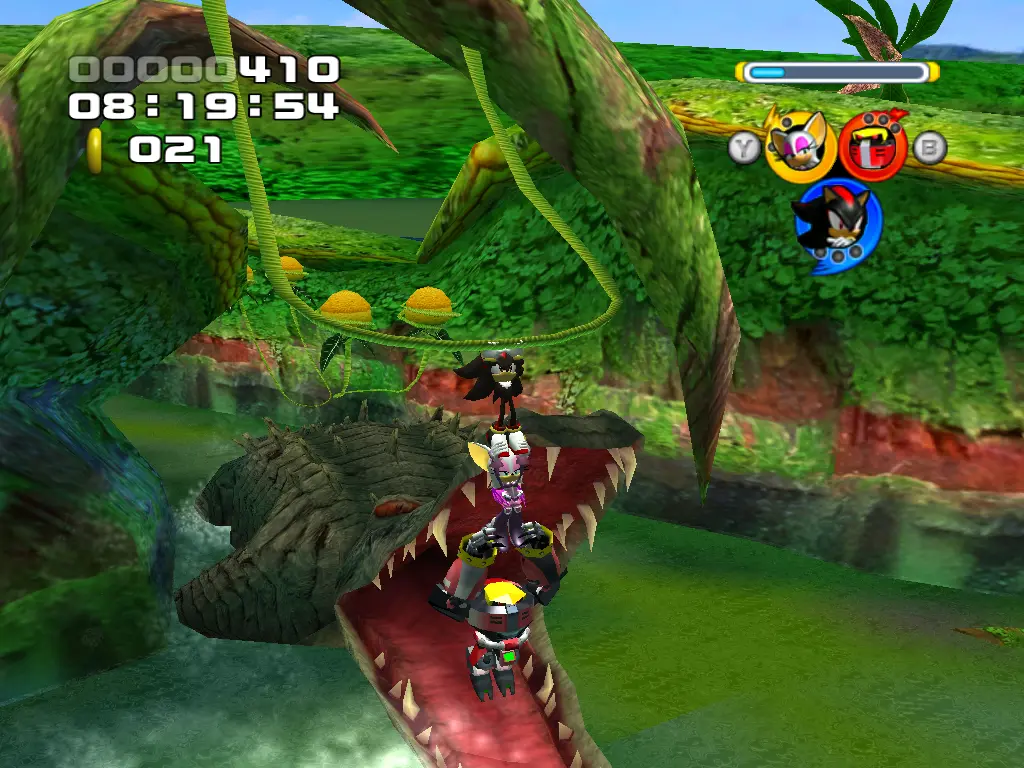
Lost JungleStage 10The swamp beneath Frog Forest’s canopy, full of swinging vines and springy plants.
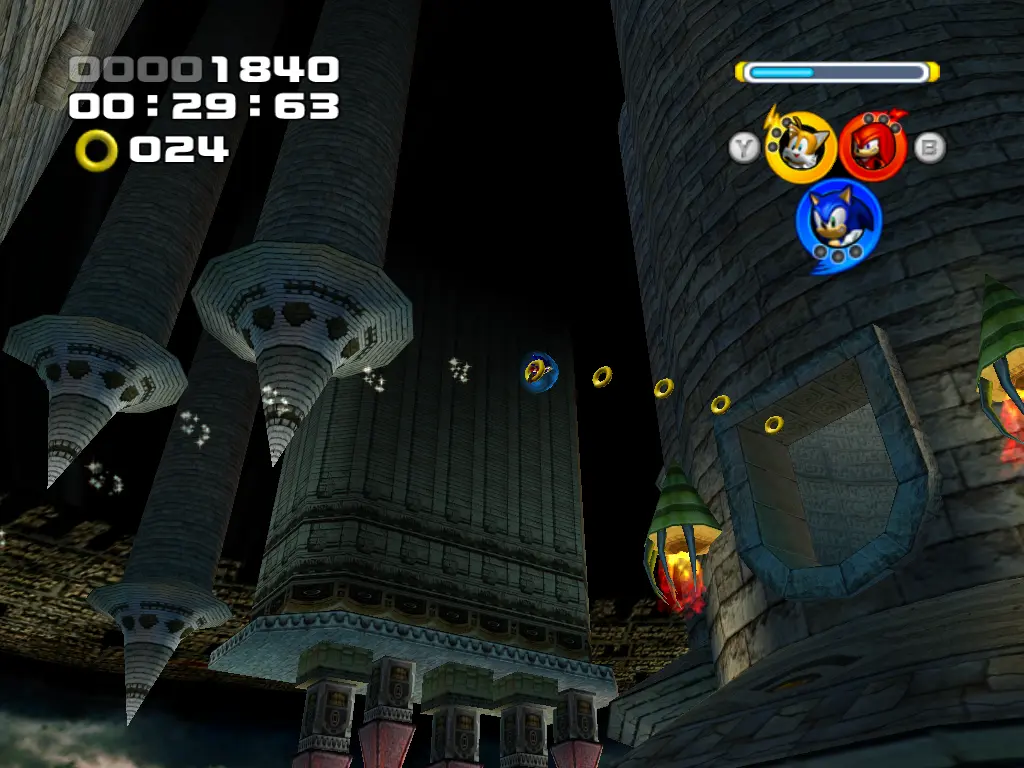
Hang CastleStage 11Invisible walkways, floating platforms, pumpkin-headed ghosts and gravity that will not stay put.
Mystic MansionStage 12 · then Robot StormInside the castle’s walls, where switches teleport the team around.
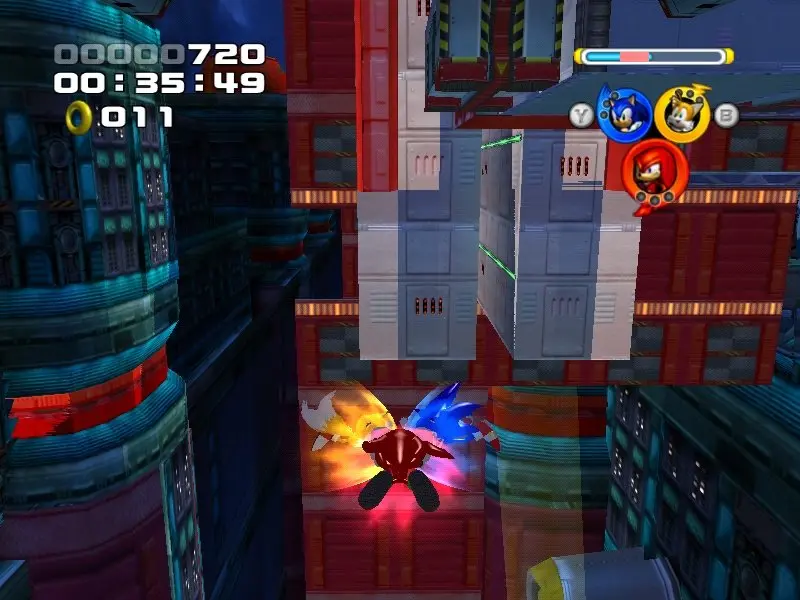
Egg FleetStage 13A dash across Eggman’s armada of armed airships, so high Rouge wonders if they have reached space.
Final FortressStage 14 · then the Egg EmperorThe fleet’s fortress, which reminds Amy and Knuckles of the Egg Carrier.
Collect a key, carry it to the goal without taking a hit, and you reach a Special Stage: a tube run that offers either extra lives (Bonus Challenge) or a Chaos Emerald (Emerald Challenge).
Sonic XTMS Entertainment, anime · 2003Yuji Naka expected the game, the new anime and a McDonald’s Happy Meal toy line to introduce Sonic to a new generation together. From Shadow the Hedgehog on, the Sonic X voice cast took over in the games.
Mario Kart: Double Dash bonus discNintendo · 2003North American players could try a Sonic Heroes demo on a special bonus disc packed with Nintendo’s kart racer.
Knuckles’ ChaotixSega 32X · 1995Where Vector, Espio and Charmy first appeared. Iizuka has said Heroes treats them as new characters built on the old designs.
Sonic Advance 2Game Boy Advance · 2002Cream the Rabbit and Cheese made their debut here before joining Team Rose.
Shadow the HedgehogSega · 2005Team Dark’s story, with Shadow’s lost memories and the Shadow androids, sets up his own game.
Sonic Generations and Shadow GenerationsSega · 2011, 2024Seaside Hill returned in Sonic Generations, with the Special Stages and Egg Emperor on 3DS; Sonic X Shadow Generations brought back Rail Canyon and Metal Overlord.
Characters
Twelve playable characters, three to a team. Every team has one Speed, one Fly and one Power member, and the lead character decides the formation.
Character
Who they are
In this game
Stats & abilities
Sonic the HedgehogTeam Sonic · Speed
The hero, back in a story built around speed.
Takes up “Eggman’s” challenge and becomes Super Sonic in the Last Story.
Homing Attack and Rocket Accel
Light Speed Dash and triangle jumps
Whirlwinds to climb poles
Miles “Tails” ProwerTeam Sonic · Fly
Sonic’s best friend.
Lifts the team over gaps and takes down flying enemies.
Flies for a short time and attacks airborne enemies.
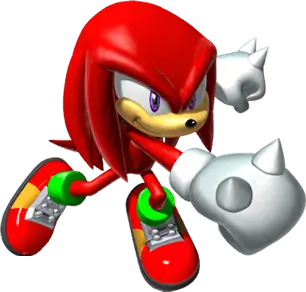
Knuckles the EchidnaTeam Sonic · Power
Guardian of the Master Emerald.
Smashes through obstacles and enemies; in the end chases off after Rouge.
Breaks objects and glides on air currents.
Shadow the HedgehogTeam Dark · Speed
The Ultimate Lifeform from Sonic Adventure 2, back from the dead with no memory.
Joins Rouge and Omega to find out who he is, and meets the Shadow androids.
Same Speed abilities as Sonic.
Rouge the BatTeam Dark · Fly
Spy and treasure-hunter.
Wakes Shadow and Omega while raiding an Eggman base, and leaves to steal more treasure.
Fly type, like Tails.
E-123 OmegaNew · Team Dark · Power
The last robot of Eggman’s E-series, seen as a spiritual successor to Sonic Adventure’s Gamma.
Wants revenge on Eggman for sealing him away.
Power type; went on to become a series regular.
Amy RoseTeam Rose · Speed
Sonic’s devoted admirer.
Leads the beginners’ team in search of Sonic.
Team Rose’s Speed type.
Cream the Rabbit and CheeseTeam Rose · Fly
A polite young rabbit and her Chao, Cheese, from Sonic Advance 2.
Searches for Cheese’s brother, Chocola.
Team Rose’s Fly type, with Cheese at her side.
Big the CatTeam Rose · Power
The gentle giant from Sonic Adventure.
Looking for Froggy, again.
Power-type strength.
Espio the ChameleonTeam Chaotix · Speed
The quiet member of the Chaotix Detective Agency, first seen in Knuckles’ Chaotix.
Speeds through missions for the agency’s mystery client.
Speed-type moves; Chaotix stages are mission-based.
Charmy BeeTeam Chaotix · Fly
The agency’s youngest, loudest member.
Keeps asking if they can go now.
Team Chaotix’s Fly type.
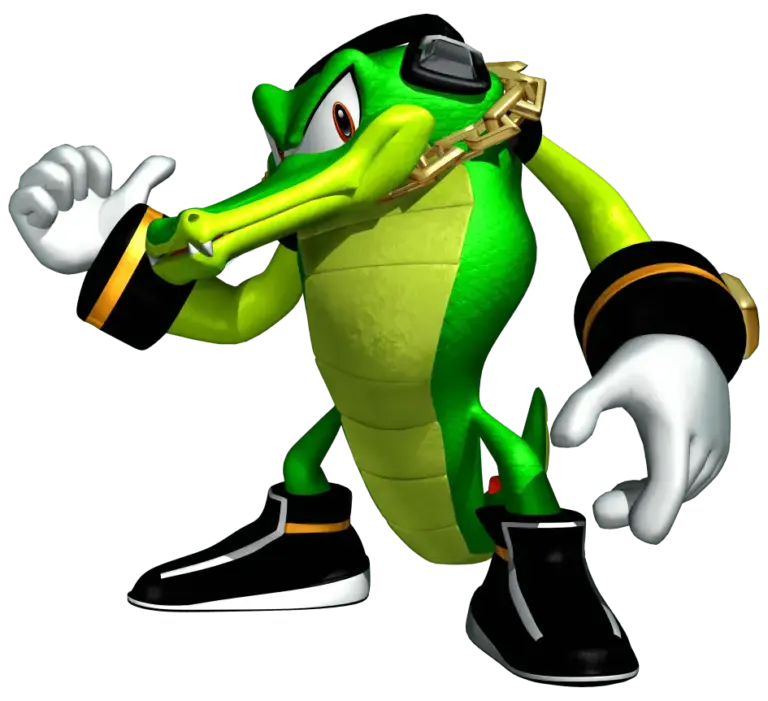
Vector the CrocodileTeam Chaotix · Power
Head of the Chaotix Detective Agency.
Takes the job for the money and ends up chasing Eggman for payment.
Power-type strength; worries about the electricity bill.
Dr. EggmanThe real one
Sonic’s arch-enemy, voiced by Deem Bristow in his last home-console Sonic game.
Locked up by his own robot and secretly employing the Chaotix to get himself out.
Not the villain this time.
Neo Metal SonicThe true villain
Metal Sonic, Sonic’s robot double from Sonic CD, rebuilt.
Seizes Eggman’s empire, impersonates him and copies the teams’ abilities to become Metal Overlord.
Egg Emperor
Metal Madness
Metal Overlord
Bosses
Seven boss fights in each story, mixing Eggman machines, robot armies and battles between the teams themselves, then the Last Story’s final battle.
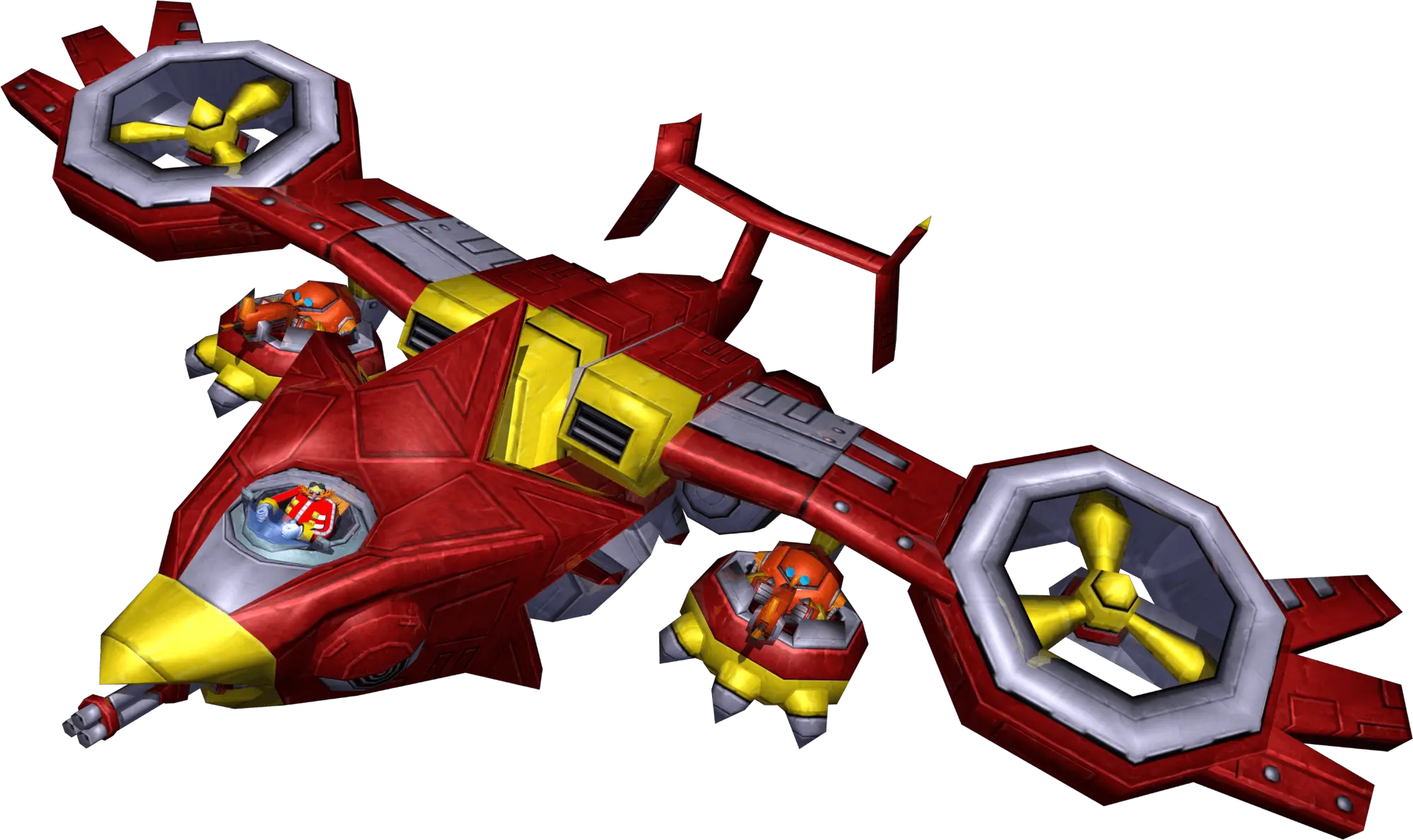
Egg HawkAfter Ocean Palace“Eggman” in a heavy VTOL gunship; the first boss.
Team BattleTeam against teamThe teams fight each other more than once.
Robot CarnivalAfter Bingo HighwayAn arena where wave after wave of robots must be destroyed.
Egg AlbatrossAfter Bullet StationFought as “Eggman” loads the fleet, Shadow androids included.
Robot StormAfter Mystic MansionA second robot gauntlet in a spookier setting.
Egg EmperorFinal FortressNeo Metal Sonic in Eggman’s armour.
Metal MadnessLast StoryNeo Metal Sonic’s first monstrous form.
Metal OverlordLast Story · Super SonicThe final boss, fought to What I’m Made Of.
The people who made it
Key credits, as listed by Sega Retro, with notes from Wikipedia’s cited sources.
Takashi IizukaDirector and lead designerChose a fresh standalone game over an Adventure 2 sequel; he has called the project the most stressful of his career.
Yuji NakaProducerSonic’s co-creator, still producing.
Shiro MaekawaScenario writerWrote the story and co-designed the storyboards.
Kazuyuki HoshinoArt directorLed the art and co-designed the storyboards.
Tetsu KatanoMain programmerMain programmer again, as on both Adventure games.
Jun SenoueSound directorWrote most of the music; Crush 40 sang the main theme and the final boss theme.
Vision ScapeCG moviesProduced the animated cutscenes; the same studio had worked on the Sonic X-treme prototype.
How it was made
Our original page had no history section. This one combines Wikipedia’s cited development history, Sonic Retro’s development page (the “Year of Sonic”, the roster and the redesigns) and the credits on Sega Retro.
The Year of Sonic
Sega billed 2003 as the Year of Sonic. Sonic X arrived on television, McDonald’s ran its first Sonic Happy Meal in years and a string of games came out, yet there had been no new 3D Sonic since 2001, and Sonic Retro notes the pressure on Sonic Team USA to prove it could still deliver a hit without a Sega console behind it.
Takashi Iizuka’s answer, made in San Francisco by 19 people over 20 months and timed for Sonic’s twelfth anniversary, was deliberately not Sonic Adventure 3. A sequel that only existing fans would buy was the worry, so he aimed at something closer to the Mega Drive games that newcomers could pick up. The slower treasure-hunting and shooting stages that critics had grumbled about were dropped, and so was the Chao Garden, which the team thought would break up the pace.
Four teams of three
Team Sonic in Speed Formation.
The big idea was characters joining forces rather than six separate stories, a team system with roots in the 32X game Chaotix, and fan demand for favourite characters pushed the roster to twelve, the series’ largest so far. Vector, Espio and Charmy came back because Sonic Team found them unusual and had barely used them; Yuji Uekawa redrew them and Iizuka treated them as new characters. E-123 Omega was created for Team Dark, Metal Sonic was redesigned with help from Kazuyuki Hoshino, the artist behind the original, and the Special Stages of the 2D games returned to break up the running. Sonic Team would have liked more teams but ran out of time.
Three consoles at once
Sega was now a third-party publisher, so Heroes was built on Criterion’s RenderWare middleware to run on the GameCube, PlayStation 2 and Xbox, with a PC version to follow. It was the team’s first work on the Sony and Microsoft machines, and Sonic Retro says the ports proved harder than expected. The content is the same everywhere by design, but the PlayStation 2 version runs at 30 frames per second instead of 60 and came off worst.
The hardest months
Iizuka remembers it as the most stressful project of his career. Covering for a colleague who had fallen ill, he lost around 10 kg and struggled to sleep, and near the deadline the programmers worked to a single rule: a bug that did not stop the player finishing the game would be left alone, and officially did not count as a bug.
Music
Most of the score is Jun Senoue’s. Crush 40 sang two of the songs, the title track and What I’m Made Of for the last boss, and every team got a vocal theme of its own, with guests including Ted Poley, Gunnar Nelson, Tony Harnell, Julien-K and Kay Hanley of Letters to Cleo.
Missing Christmas
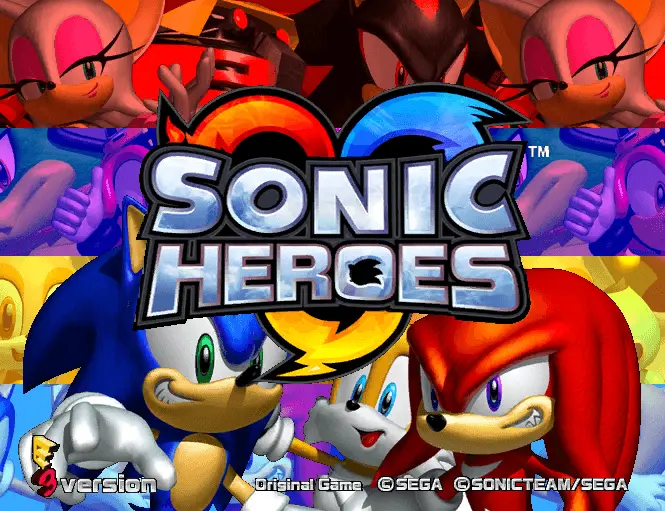
The E3 title screen.
Early copies of Mario Kart: Double Dash carried a demo, but the game itself slipped: Japan got it two weeks late, on 30 December 2003, and the West missed the holidays altogether. The GameCube version reached North America on 6 January 2004, the PlayStation 2 and Xbox versions followed on 27 January and Europe had all three in early February. Sega Retro credits the CG cutscenes to Vision Scape, with Iizuka directing, Keith Palmer producing and storyboards by Shiro Maekawa and Kazuyuki Hoshino. A PC version came out in November and December 2004; the game later joined the Sonic PC Collection (2009) and reached the PlayStation 3 as a PlayStation 2 Classic (2012).
Firsts: what this game introduced
Sonic Heroes broke new ground for the series, mostly in where it appeared.
1Multi-platform SonicWikipedia calls it the first multi-platform Sonic: the first to come out on rival companies’ consoles at the same time (the 8-bit games had shared work between Sega’s own Master System and Game Gear).
2Sonic on PlayStation and XboxSonic’s first original game on a non-Sega home console, and his first appearance on PlayStation 2 and Xbox.
3E-123 OmegaDebut of the E-series robot who became a series regular.
4Team playSwitching between three characters with different skills, an idea later reused in Sonic Forces and Team Sonic Racing.
5Chaotix returnSonic Team’s first use of Vector, Espio and Charmy, the detectives from 1995’s Knuckles’ Chaotix.
6Special Stages are backEmerald-collecting Special Stages return from the 2D games after both Adventure games left them out.
Cheats & secrets
Our original page had no secrets section, so this one is new. Sonic Heroes rewards completion rather than codes.
Super Hard mode
Collect all 120 Emblems and earn all 141 A ranks to unlock Super Hard mode: all 14 stages back to back as Team Sonic, with tougher layouts than Team Dark’s, no scores and no bosses.
Two-player games
Only Action Race is open at first; Emblems unlock the rest of the two-player mini-games, each with three stages and a best-of-three option.
Music and movies
Finishing each team’s story unlocks its theme song and CG movie, and the Last Story unlocks the ending theme, What I’m Made Of.
Idle chatter
Leave the Chaotix standing still and Vector remembers the unpaid electricity bill; Rouge wonders why she has not heard from the President lately.
Checked against Sonic Retro, November 2026.
Glitches, exploits and oddities
With programmers told to fix only game-breaking bugs, it is no surprise Sonic Retro has a long list.
Endless Team Blast
Fly Formation.
In Fly Formation, press Attack and Switch together and the flyer tries to throw a teammate who is not there. Hold the buttons and the Team Blast gauge fills rapidly. It works in every version.
Slide-kick jump
Slide-kick off a ledge with Sonic or Shadow and you can still jump in mid-kick, as long as you press before the fall begins.
Rocket Accel moon jump
In the PC version at least, a Rocket Accel into a wall followed by a well-timed jump launches Sonic or Shadow far higher than intended.
Big’s twisted spine
With Team Rose, a carefully timed switch to Cream for a Body Press as Big lands from a ledge produces a memorably contorted Big.
Gongs versus Team Blasts
Power Gongs can interfere with Team Blasts.
Videos & media
IGN’s 2003 footage of the PlayStation 2 version, and a complete playthrough of all four teams.
Period gameplay footage from IGN.
A complete playthrough of every team and the Last Story from FCPlaythroughs.
Trivia & facts
Vector.Pinned to the notice board behind Vector at the start of Team Chaotix’s story are concept drawings of robots from the original Sonic the Hedgehog.
The characters often refer to older games: Knuckles compares Frog Forest’s mushrooms to his own island, Shadow reacts badly to Rouge mentioning space, and Omega’s line for an E rank admits he never beat Gamma or Beta.
It was one of the last games with the original Sonic Adventure voice cast; from Shadow the Hedgehog onwards the Sonic X actors took over, and it was Deem Bristow’s last home-console game as Eggman; his final voice work came later in 2004, in Sonic Advance 3.
E3 artwork of Ocean Palace.Image via Sonic RetroThe animated cutscenes were made by Vision Scape, which had worked on the cancelled Sonic X-treme.
The PlayStation 2 version is the only one that lets you switch between English and Japanese voices, and only in Japan and North America.
In the UK the PlayStation 2 version alone earned a Double Platinum award, meaning at least 600,000 copies.
Media & artwork
Box art, artwork and screenshots from Sonic Scene’s own galleries and Sonic Retro. Select any image to view it larger.
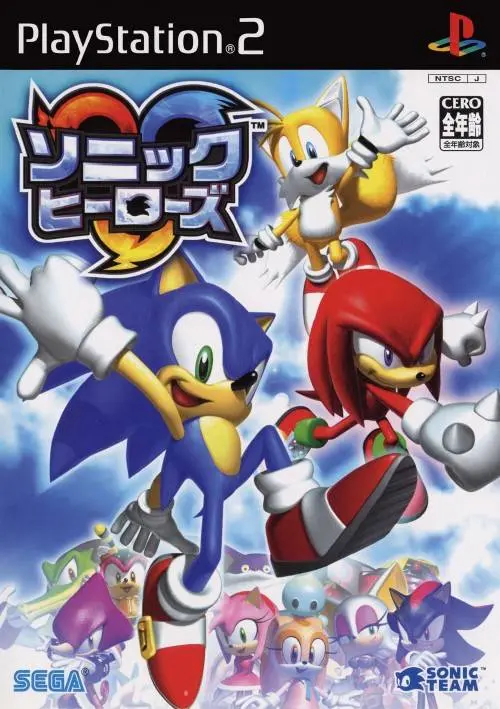
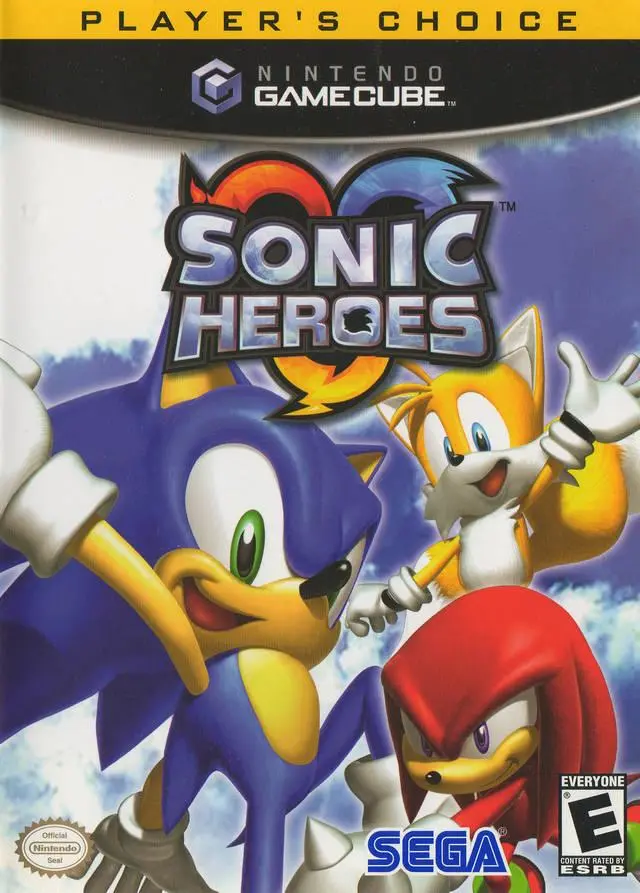
European GameCube box.North American GameCube box.Japanese GameCube box.European PlayStation 2 box.North American PlayStation 2 box.North American Xbox box.Japanese PlayStation 2 box.North American Player’s Choice box.GameCube disc.English logo.Japanese logo.Sonic.Power Formation.Egg Hawk.Egg Albatross.Seaside Hill concept.Seaside Hill concept.Concept art.Concept art.Team Battle.Team Dark against Team Chaotix.Robot Carnival.Robot Storm.Egg Hawk.Egg Albatross.
Sonic Heroes made Sonic a multi-platform star. Its studio took a new name, Sega Studios USA, and went straight on to Shadow the Hedgehog, set shortly after Heroes, before merging back into Sonic Team in Japan in 2008.
Releases and re-releases
GameCube, PlayStation 2, Xbox (Japan)30 December 2003 – ¥6,980 each.
GameCube (North America)6 January 2004 – US$49.95.
PlayStation 2 and Xbox (North America)27 January 2004 – The first Sonic on both consoles.
PCNovember–December 2004 – North America 16 November, Europe 26 November, Japan 9 December.
Sonic Heroes and Super Monkey Ball Deluxe2005 – A two-in-one pack for Xbox; on GameCube, Heroes shared a Duo Pack with Super Monkey Ball 2.
Sonic PC Collection2 October 2009 – Windows compilation.
PlayStation 3 (PS2 Classics)22 February 2012 – The PlayStation 2 version as a download.
How it is remembered
Its team system lived on in Sonic Forces and Team Sonic Racing, Omega and the Chaotix became regulars, and its stages keep reappearing in spin-offs from Mario & Sonic at the Olympic Winter Games to Sonic Racing: CrossWorlds. Critical opinion has stayed lukewarm, with USgamer placing it in the lower half of the series in 2017, but its sales speak for themselves.
Sales & reviews
Sales
Sonic Heroes sold 1.42 million copies by the end of March 2004 (850,000 of them in the US, 420,000 in Europe, 150,000 in Japan), another 1.57 million over the following year and 420,000 more in the US in 2006–07: at least 3.41 million in all, by Sega’s financial reports. It passed a million in Europe by October 2004, and stayed the best-selling 3D Sonic until Sonic Frontiers overtook it in 2023.
3.41mCopies sold, by Sega’s figures
1m+Sold in Europe by October 2004
77%Sega Retro average, GameCube (11 reviews)
1.42mSold by the end of March 2004
Reception and review scores
Period scores from Sega Retro’s review index, which links each one to a scan of the original page.
Consoles +France · Xbox
93%
Nintendo PowerUS · GameCube
84%
Nintendo Official MagazineUK · GameCube
80%
PlayStation 2 Official MagazineUK · PlayStation 2
8/10
GameProUS · GameCube, Xbox
78%
Official Xbox MagazineUK · Xbox
7.7/10
Electronic Gaming MonthlyUS · all consoles
67%
NGC MagazineUK · GameCube
65%
PlayUS · PlayStation 2
58%
EdgeUK · Xbox
5/10
Official US PlayStation MagazineUS · PlayStation 2
2/5
PC GamerUK · PC
20%
The speed and spectacle won praise: IGN thought it recreated the loops and corkscrews of the classic games in 3D brilliantly, GameSpot called it the purest, most action-packed 3D Sonic so far and made it its GameCube pick for January 2004, while Bingo Highway was a favourite. The visuals and music were generally liked, though GameSpot felt the graphics were little more than a polished Dreamcast game.
The team mechanic divided critics, from GameSpy and IGN, who enjoyed its strategy, to GameSpot, which felt nobody plays Sonic for the supporting cast, and 1UP, which found it repetitive. The camera, collision detection and voice acting drew the most fire, and the PlayStation 2 and PC versions scored lowest because of their frame rate and graphical faults.
Honours
GameSpot · January 2004GameCube game of the monthIts editors’ pick for January.
Every fact on this page was checked against the sources below. Sonic Retro and Sega Retro pages were read through Wayback Machine copies from 2024 and 2025, because both live sites show a bot check; each Sonic Retro link opens the nearest archived copy. Magazine scores come from Sega Retro’s review index, which links each score to a scan of the original page.
To provide the best experiences, we use technologies like cookies to store and/or access device information. Consenting to these technologies will allow us to process data such as browsing behavior or unique IDs on this site. Not consenting or withdrawing consent, may adversely affect certain features and functions.
Functional
Always active
The technical storage or access is strictly necessary for the legitimate purpose of enabling the use of a specific service explicitly requested by the subscriber or user, or for the sole purpose of carrying out the transmission of a communication over an electronic communications network.
Preferences
The technical storage or access is necessary for the legitimate purpose of storing preferences that are not requested by the subscriber or user.
Statistics
The technical storage or access that is used exclusively for statistical purposes.The technical storage or access that is used exclusively for anonymous statistical purposes. Without a subpoena, voluntary compliance on the part of your Internet Service Provider, or additional records from a third party, information stored or retrieved for this purpose alone cannot usually be used to identify you.
Marketing
The technical storage or access is required to create user profiles to send advertising, or to track the user on a website or across several websites for similar marketing purposes.




 Seaside HillStage 1Palm trees, sand and chequered hills, plus white ruins that loop through the surf. Rebuilt years later in Sonic Generations.
 Ocean PalaceStage 2 · then the Egg HawkSpiralling white ruins across the waves off Seaside Hill, with stone doors to punch through and pillars that collapse.
 Grand MetropolisStage 3A huge futuristic city that has fallen to “Eggman”.
 Power PlantStage 4The giant energy installation that powers Grand Metropolis.
 Casino ParkStage 5Pinball and neon; Amy compares it to Casinopolis.
 Bingo HighwayStage 6 · then Robot CarnivalA casino road singled out by several reviewers as the game’s highlight.
 Bullet StationStage 8 · then the Egg AlbatrossEggman’s base in Rail Canyon, where his supply trains end and the Egg Fleet is loaded.
 Frog ForestStage 9Giant mushrooms and giant frogs; Knuckles is reminded of his own island.
 Lost JungleStage 10The swamp beneath Frog Forest’s canopy, full of swinging vines and springy plants.
 Hang CastleStage 11Invisible walkways, floating platforms, pumpkin-headed ghosts and gravity that will not stay put.
 Mystic MansionStage 12 · then Robot StormInside the castle’s walls, where switches teleport the team around.
 Egg FleetStage 13A dash across Eggman’s armada of armed airships, so high Rouge wonders if they have reached space.
 Final FortressStage 14 · then the Egg EmperorThe fleet’s fortress, which reminds Amy and Knuckles of the Egg Carrier.



 Sonic the HedgehogTeam Sonic · Speed
 Miles “Tails” ProwerTeam Sonic · Fly
 Knuckles the EchidnaTeam Sonic · Power
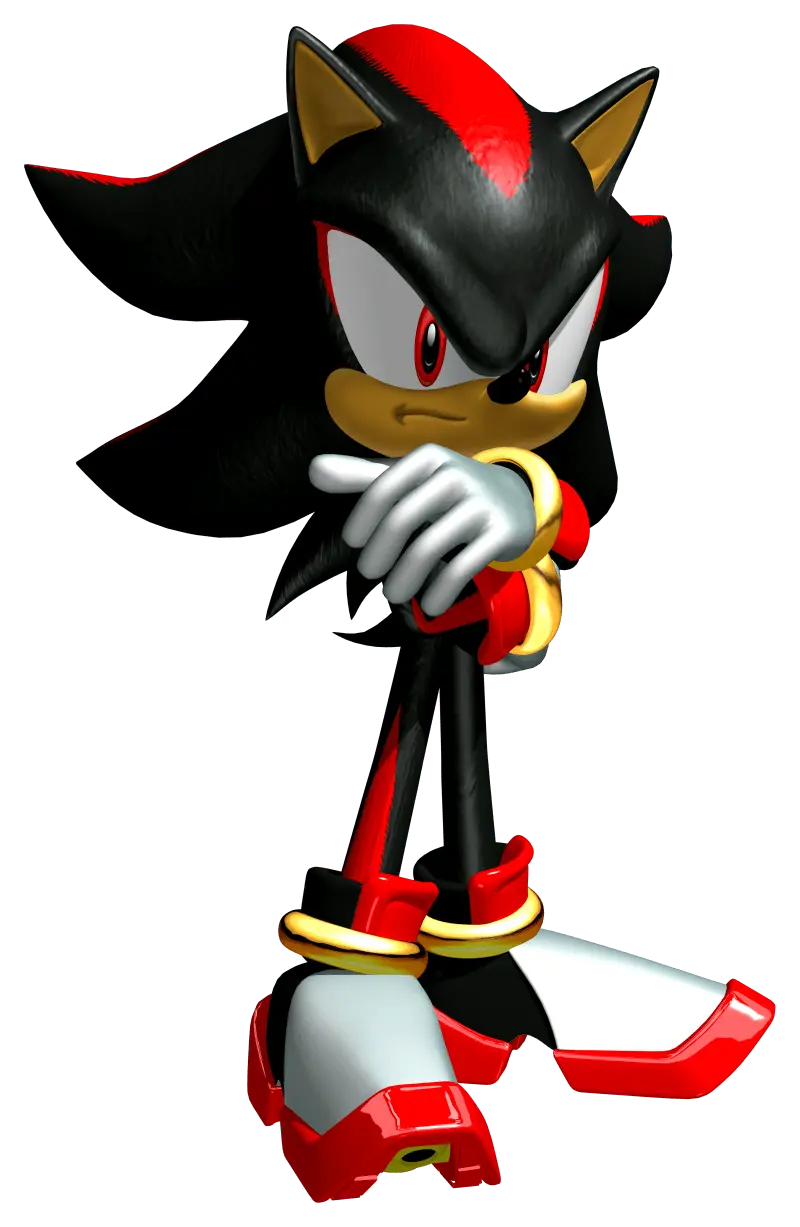 Shadow the HedgehogTeam Dark · Speed
 Rouge the BatTeam Dark · Fly
 E-123 OmegaNew · Team Dark · Power
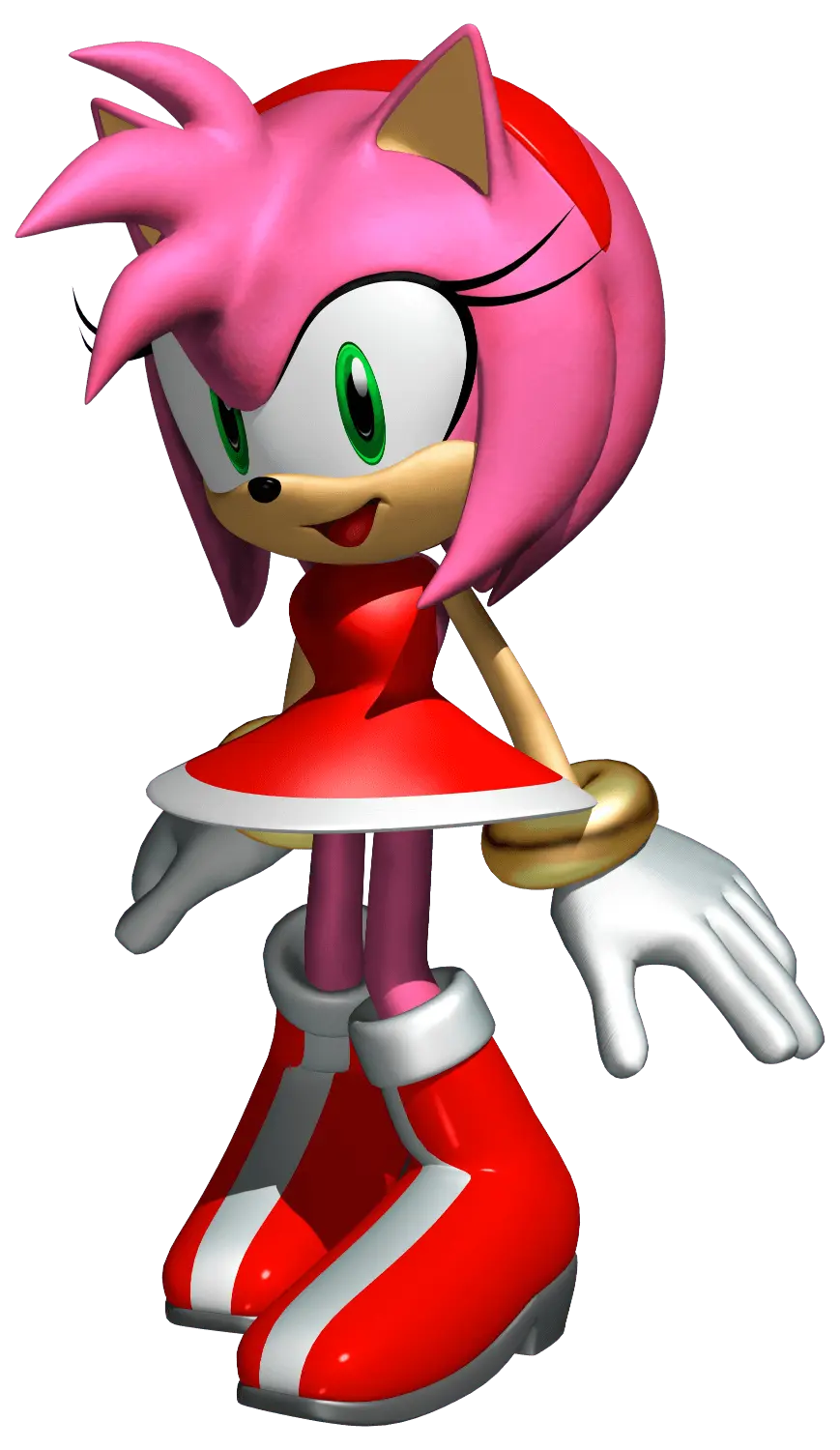 Amy RoseTeam Rose · Speed
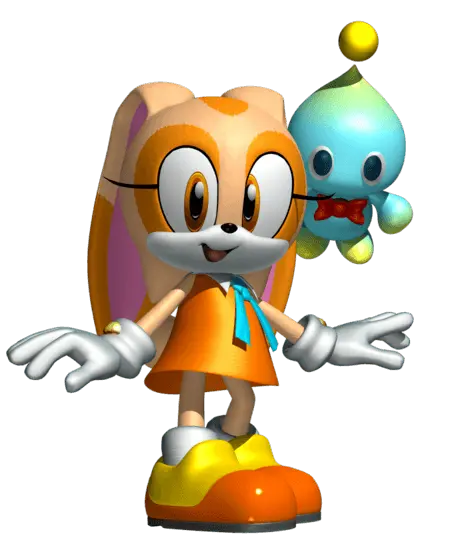 Cream the Rabbit and CheeseTeam Rose · Fly
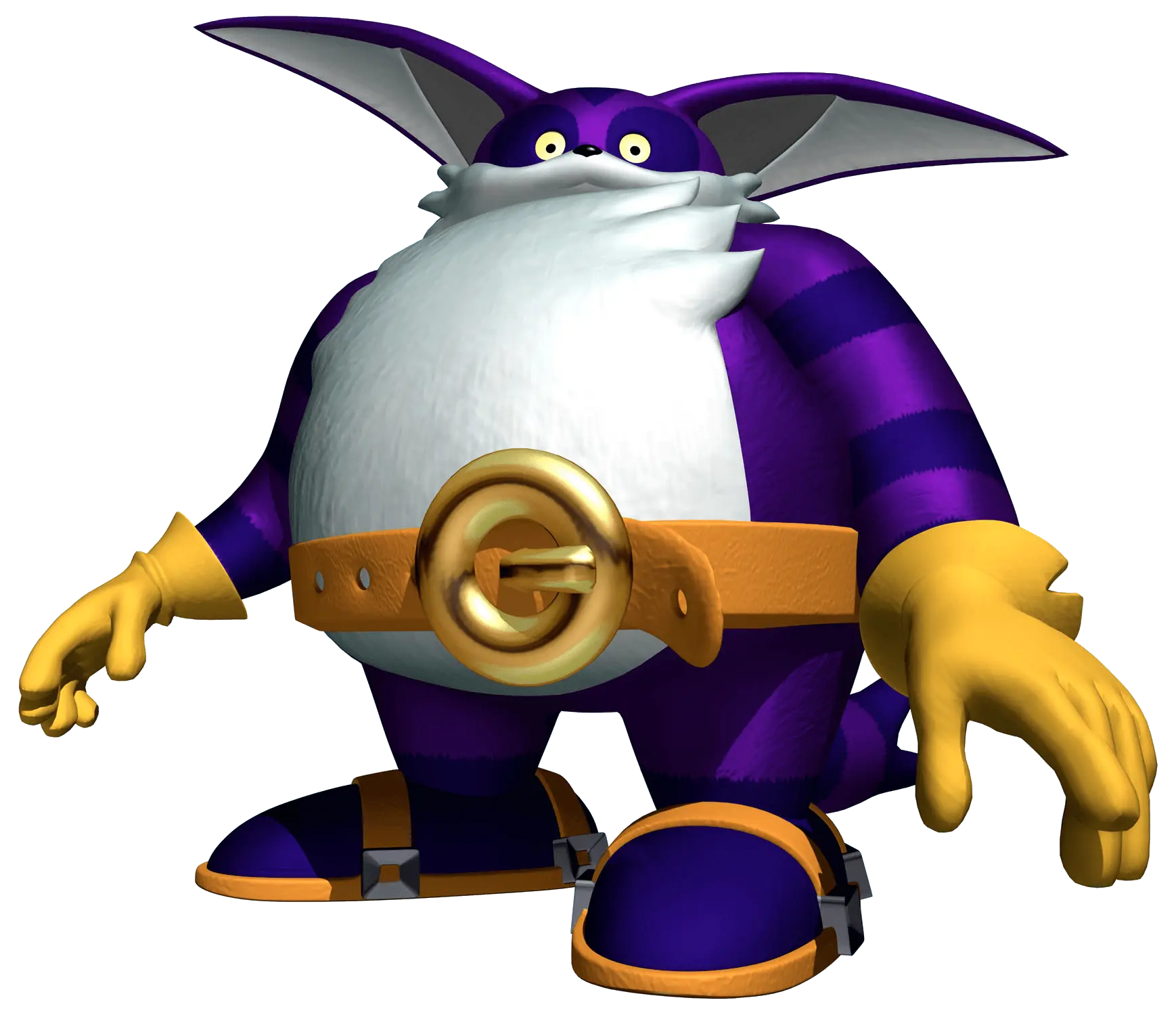 Big the CatTeam Rose · Power
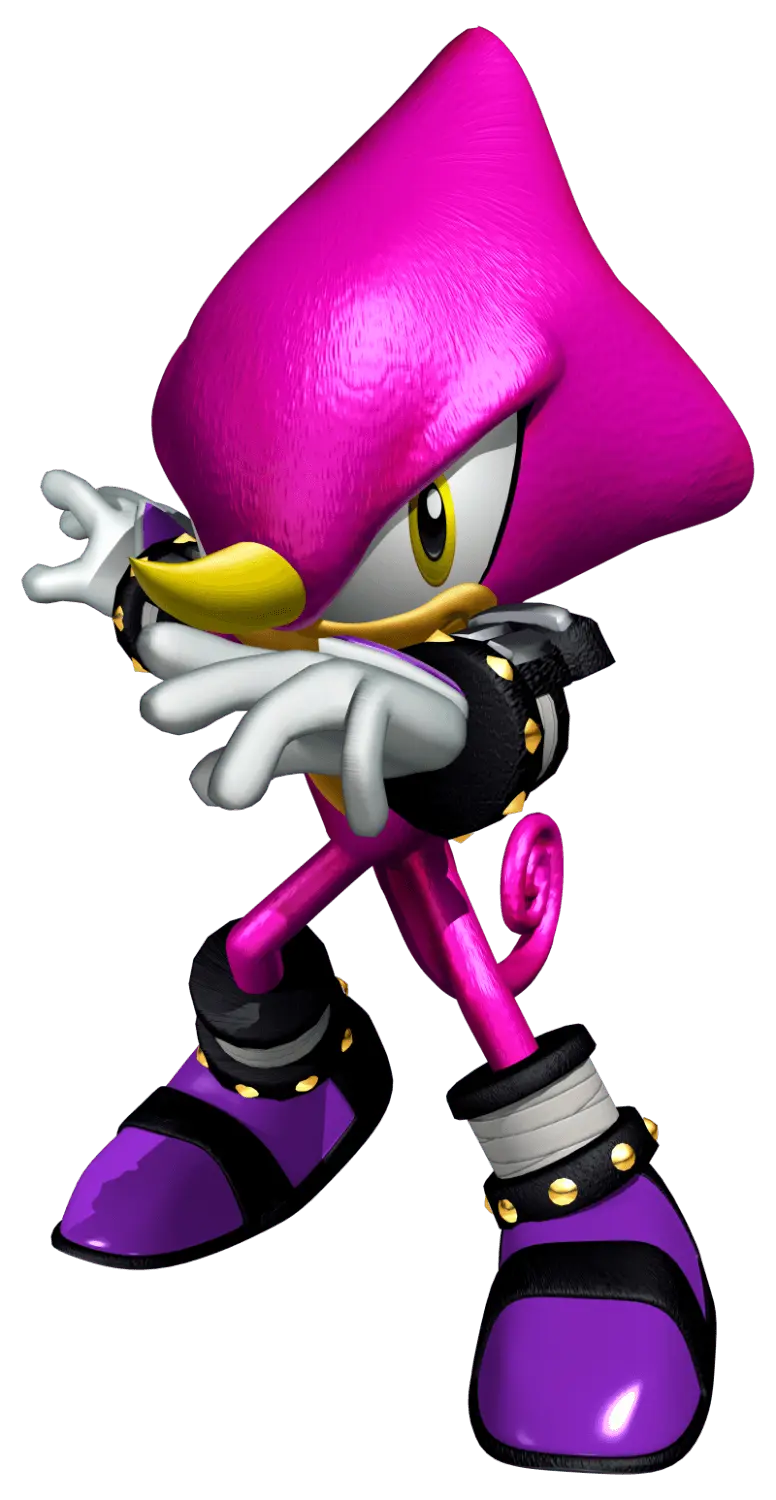 Espio the ChameleonTeam Chaotix · Speed
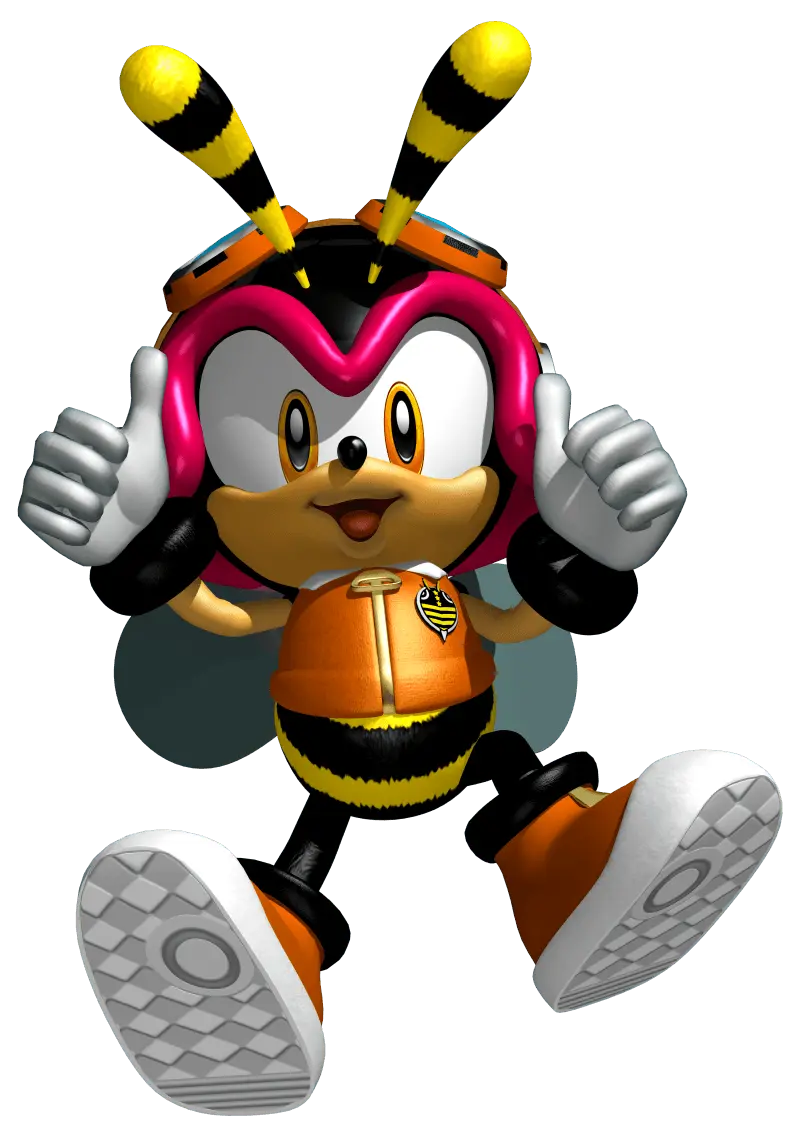 Charmy BeeTeam Chaotix · Fly
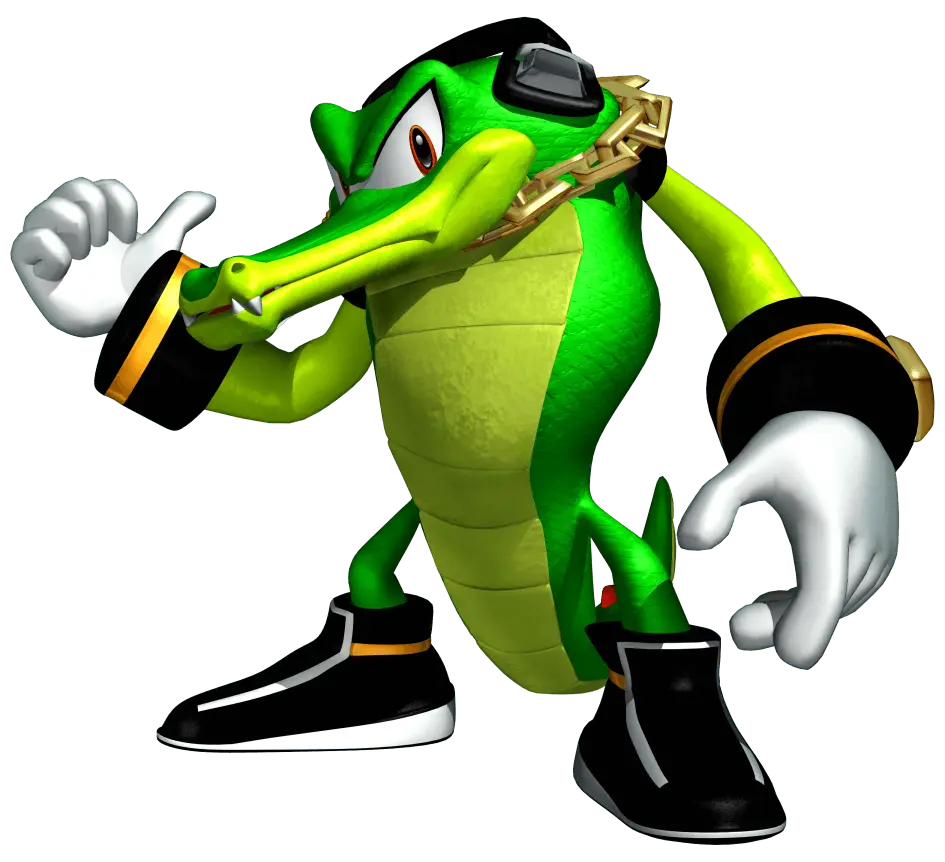 Vector the CrocodileTeam Chaotix · Power
 Dr. EggmanThe real one
 Egg HawkAfter Ocean Palace“Eggman” in a heavy VTOL gunship; the first boss.
 Team BattleTeam against teamThe teams fight each other more than once.
 Robot CarnivalAfter Bingo HighwayAn arena where wave after wave of robots must be destroyed.
 Egg AlbatrossAfter Bullet StationFought as “Eggman” loads the fleet, Shadow androids included.
 Robot StormAfter Mystic MansionA second robot gauntlet in a spookier setting.
 Egg EmperorFinal FortressNeo Metal Sonic in Eggman’s armour.
 Metal MadnessLast StoryNeo Metal Sonic’s first monstrous form.
 Metal OverlordLast Story · Super SonicThe final boss, fought to What I’m Made Of.