
 Sonic Underground · DiC · 1999 | |
| French title | Sonic le Rebelle |
| Produced by | DIC Productions, Les Studios Tex, Sega of America and TF1 |
| Directed by | Marc Boreal, François Hemmen, Daniel Sarriet; Tom Smith (US) |
| Main writers | Ben Hurst & Pat Allee, Mark Edens, Len Janson, Michael Edens |
| Music | Songs by Mike Piccirillo; theme “Sonic Underground” by Robby London and Mike Piccirillo |
| Voices | Jaleel White (Sonic, Sonia, Manic); singing: Samuel Vincent, Stevie Vallance, Tyley Ross; Garry Chalk (Robotnik); Gail Webster (Queen Aleena) |
| Episodes | 40 in one season · full episode guide |
| First aired | 6 January 1999 (France, TF1) · 2 May 1999 (UK, ITV) · 30 August 1999 (US, BKN Kids II) |
| Last new episode | 23 May 1999 (France) · 22 October 1999 (US) |
| Running time | 22 minutes |
| DVD | Shout! Factory, Volumes 1–2 (2007–2008); NCircle, The Complete Series (2023) |
| Watch free | Official full episodes on WildBrain’s YouTube channels |
Sonic Underground was the third and last Sonic cartoon made by DiC, following Adventures of Sonic the Hedgehog and Sonic the Hedgehog (SatAM). It threw out almost everything fans knew. Sonic is a prince, he has a sister and a brother, Sonia and Manic, and the three are on the run from Dr. Robotnik while they search for their mother, Queen Aleena, who gave them up as babies to fulfil a prophecy.
They are also a rock band. Each sibling carries a medallion that turns into an instrument and a weapon, and almost every episode stops for a song. The 40 episodes premiered in France in January 1999, reached the US that August and then ended, with the family still apart and the prophecy unfulfilled. Here is everything about it: the story, the characters, all 40 songs, the voices, the making of the show and where to watch it now.
The Story

Mobius was ruled by Queen Aleena Hedgehog until Dr. Robotnik seized her capital, Mobotropolis, renamed it Robotropolis and outlawed the royal family. Opponents end up in the Roboticizer, and the nobles keep their freedom by paying him. To catch the Queen’s children he hires two bounty hunters: Sleet, a wolf, and Dingo, a muscle-bound dingo whom Sleet can transform into almost anything.
The siblings grew up apart, unaware of one another: Sonic with a loving family and then his Uncle Chuck, Sonia in an aristocrat’s mansion, and Manic among thieves. Once the Oracle of Delphius brings them together, they travel Mobius in a camper van, helping local Freedom Fighters, following rumours of their mother and staying one step ahead of Robotnik.
Unlike SatAM, the series barely ever stays in one place. Each episode visits a new town, island, desert or alternate world, and the Resistance is a network of local groups rather than a single hideout.
The Queen Aleena Prophecy
The Council of Four
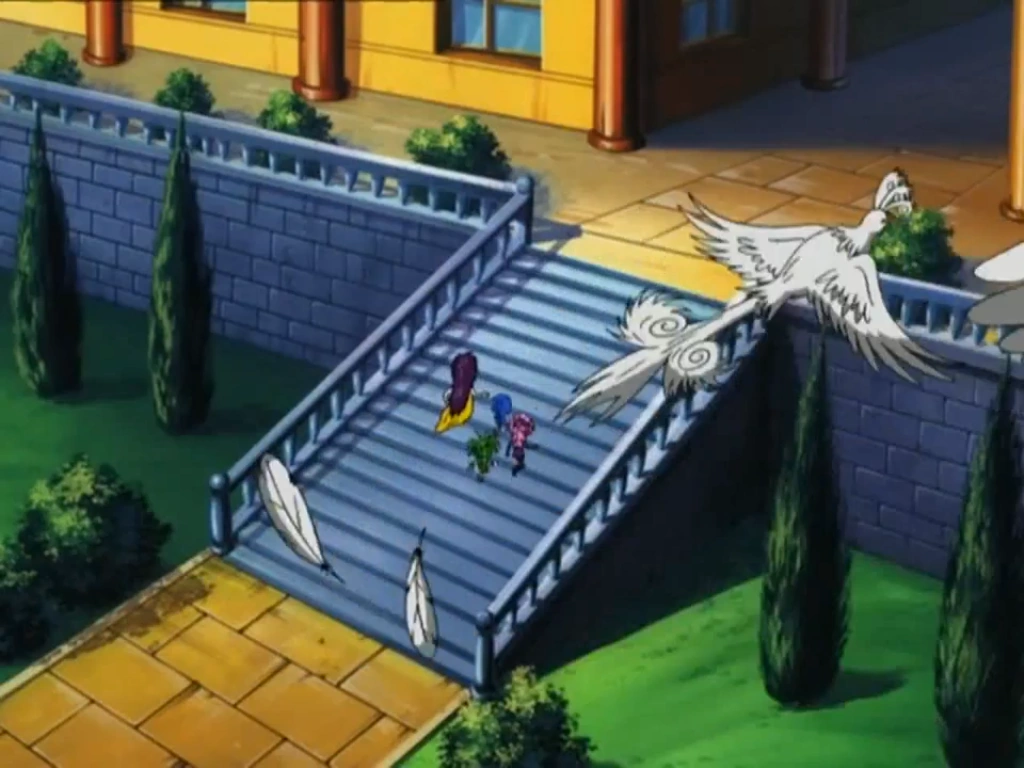
Soon after Robotnik’s takeover, the Oracle of Delphius gave Queen Aleena a prophecy: one day she and her three children would unite as the Council of Four and overthrow Robotnik. But there was a price. To keep the prophecy alive and her babies safe, she had to give them up and stay hidden. She left each child on a different doorstep, and has been watching over them from a distance ever since (Beginnings).
Robotnik knows the prophecy too, which is why he hunts the siblings so hard. The show teases a reunion again and again: Aleena addresses a crowd in Wedding Bell Blues, sends Sonia her own necklace in Come Out Wherever You Are, comforts a sleeping Manic in A Hedgehog’s Home Is Her Castle, signs her notes “Q.A.” in Artifact and Head Games, speaks to Sonia in Six Is a Crowd and quietly saves Manic’s life in Sonia’s Choice. In When in Rome… the Oracle even shows the siblings a vision of the reunion, with Robotnik in it too.
And then it stopped. The 40th episode, Virtual Danger, is a standalone adventure, and the series was not renewed. The Council of Four never meets on screen.
The epilogue that never was. Archie Comics, which published Sonic comics until 2017, came close to finishing the story. In October 2012 it announced, through the games site Destructoid, that Sonic Universe #50 would be a Sonic Underground epilogue written by Ian Flynn, and showed the cover (Sonic Retro’s news report; Sonic Wiki Zone links the reveal to New York Comic Con 2012). The issue ran a Metal Sonic story instead, and writer Ian Flynn later explained that Sonic Underground material was off-limits for the comic. When Sega’s licence moved to IDW in 2017, that chance was gone.
Characters
The show kept Sonic, Robotnik and Knuckles from the games and built a new cast around them. Voice credits below come from Wikipedia’s cast list, Sonic Retro and Behind the Voice Actors; where they disagree, the voice cast table says so.
The royal family
 SonicThe eldest sibling and heir to the throne. As fast as ever, a chili-dog addict who cannot swim, and the band’s lead singer and guitarist.Voice: Jaleel White (speaking), Samuel Vincent (singing)
 SoniaRaised as an aristocrat, she hates getting dirty but packs a spin attack, martial arts and a photographic memory. Keyboard player.Voice: Jaleel White (speaking), Stevie Vallance (singing)
 ManicThe youngest, raised by thieves and still the best lock-pick on Mobius. Drummer, and the only sibling with no natural power.Voice: Jaleel White (speaking), Tyley Ross (singing)
- Queen AleenaThe deposed ruler of Mobius, always one step ahead of her own children. She also introduces the story at the start of most episodes.Voice: Gail Webster

Villains
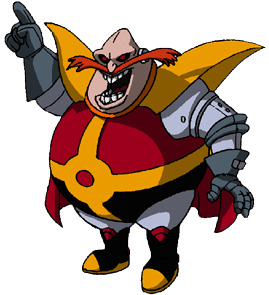 Dr. RobotnikThe dictator who conquered Mobius and renamed its capital Robotropolis, ruling it with Swatbots and the Roboticizer.Voice: Garry Chalk
 SleetA scheming wolf bounty hunter with a remote that can turn his partner into almost anything.Voice: Maurice LaMarche
 DingoSleet’s dim, partly roboticized muscle, who has a soft spot for Sonia.Voice: Peter Wilds (see the cast table)
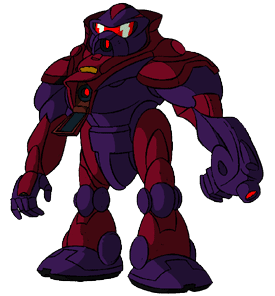 SwatbotsRobotnik’s robot soldiers and police. They look nothing like SatAM’s.Voice: Maurice LaMarche
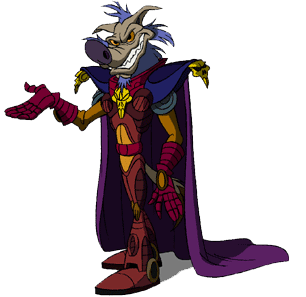

Allies
 KnucklesGuardian of the Floating Island and its Chaos Emerald, first seen in Friend or Foe?. Proud, gullible and fond of Sonia.Voice: Brian Drummond
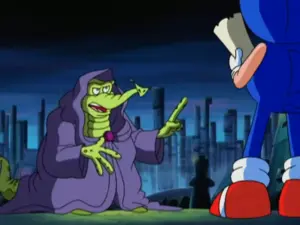 The Oracle of DelphiusThe cave-dwelling prophet, named after the Oracle at Delphi, who guides the siblings and gave them their medallions.Voice: Maurice LaMarche
 BartlebyA wealthy, nervous mink and Sonia’s former fiancé. He pays Robotnik’s tributes because he must, but his loyalty is to the Queen.
 CyrusSonic’s old friend and the Resistance’s technician, introduced as Robotnik’s unwilling spy in Tangled Webs.Voice: Ian James Corlett
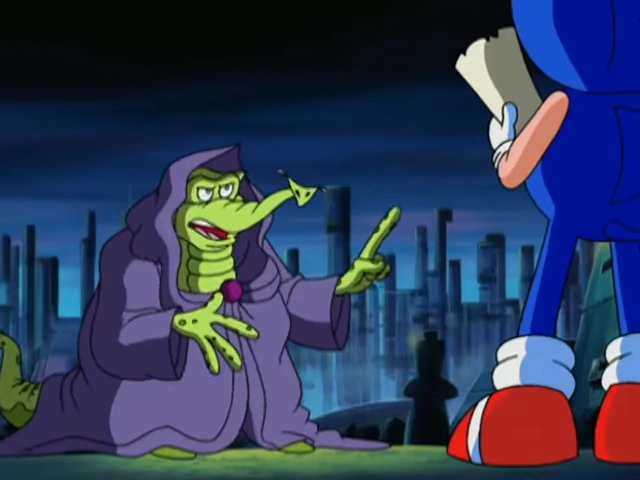
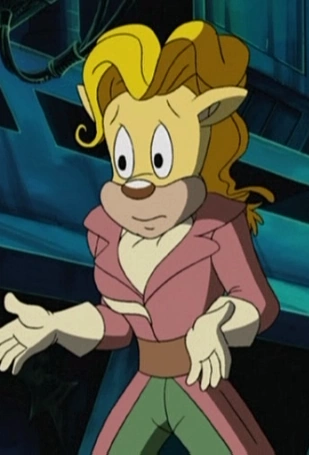

Character art via Sonic Wiki Zone. Other recurring friends include Trevor, a hippie mouse, and Renée, a fox who leads the Freedom Fighters of Anays.
Spotlight: Sonia and Manic
Sonic had starred in two cartoons already; his siblings were made for this one. They are the show’s biggest addition to Sonic history, and its most-missed characters.

Sonia the Hedgehog
Left on the doorstep of the wealthy Lady Windermere, Sonia grew up with piano lessons, ball gowns and a fiancé, Bartleby. She is a fish out of water in the Resistance: she hates dirt, sewers and camping, and is happiest at a spa or a debutante ball. She is also a fighter, with a cyclone-style spin attack and martial arts she learns from Gondar in Getting to Know You, a photographic memory, and a pink motorbike that keeps up with Sonic. Her keyboard fires lasers and puts up a cloud of pink mist for cover.
Her love life gets plenty of screen time: Bartleby (Wedding Bell Blues, Bartleby the Prisoner), Stripes (The Last Resort) and, during the Chaos Emerald story, Knuckles; Sonic Wiki Zone also counts Dingo’s crush on her. Her best episodes include The Price of Freedom, Come Out Wherever You Are, Sonia’s Choice and The Pendant. Jaleel White speaks for her and Stevie Vallance (credited as Louise Vallance in some lists) sings.
After the show: Sonia and her brothers appear in Archie’s Sonic Super Special #10, “Zone Wars” (July 1999), which visits their reality; a poster in Amy’s room in Sonic the Hedgehog #144 (December 2004) advertises a Sonic Underground “inter-dimensional tour”; and she turns up, by accident, on a Queen of Diamonds playing card on the Roulette Road track in the Wii and PC versions of Sonic & Sega All-Stars Racing (2010). The card art was traced from a fan’s drawing, and developer Sumo Digital apologised to the artist.
Manic the Hedgehog
Manic’s basket was stolen from its doorstep by a thief and he was raised in the sewers of Robotropolis by Farrell, who taught him to pick pockets and locks. Laid-back, sarcastic and calling his mother “Ma”, he keeps getting into trouble with his siblings over his light fingers, yet his skills save them again and again: he finds the hidden way into Robotnik’s citadel in Harmony or Something and pockets the override key that stops a self-destruct.
He is the only sibling without a natural power, so he learns to throw his drumsticks like darts and rides a hoverboard. His drums can split the ground and start earthquakes, and the Oracle rates them the most powerful of the three instruments. His best episodes include Mobodoon, Underground Masquerade, Bug! and Three Hedgehogs and a Baby. Tyley Ross sings for him.
After the show: Manic appears with his siblings in Sonic Super Special #10, and in the same 2004 poster gag. Sonic Wiki Zone lists no other official appearances outside the TV series and Archie’s comics.
Not found: we looked for appearances by Sonia or Manic in Sonic Boom and in IDW’s Sonic comics and could not find a reliable source for either, so none are listed here.
Medallions & Instruments
The Oracle of Delphius gave each sibling a medallion that turns into a musical instrument. Played in harmony, they make the band; turned on Robotnik’s forces, they are weapons, and all three can fire laser blasts.
- Sonic: electric guitar
A multi-necked guitar that fires laser blasts, sometimes with a strum of the strings. Sonic sings lead on many of the songs.
- Sonia: keyboard
A keyboard on a stand that doubles as a two-handed laser gun. Played the right way, it fills the air with pink mist for a getaway.
- Manic: drums
Space-age drums that shake the earth, from small tremors to full earthquakes, with cymbals that work as shields against laser fire. The Oracle calls them the most powerful of the three.
- The siblings learn to use the medallions properly in the Origins trilogy, ending with Harmony or Something.
- In Head Games, the medallions wake the giant stone guardians of Speedster Island.
- In Who Do You Think You Are, Sonia, without her memory, sells her medallion to a local merchant.
- In When in Rome…, the Oracle takes the medallions away to test the siblings.
The Songs
Music was the show’s big idea. Every episode has a song by the band. The show’s songwriter was Mike Piccirillo, who also co-wrote the theme with producer Robby London. Piccirillo has said he wrote the songs from the scripts, often before any storyboards existed, and that the scripts usually spelled out the moral each song should carry (in an interview cited by Wikipedia). That is why so many titles sound like lessons: “Face Your Fear”, “Never Give Up”, “Working Together in Harmony”.
Who is singing?
Jaleel White, already the voice of Sonic in DiC’s two earlier cartoons, speaks for all three siblings. Each has a separate singing voice: Samuel Vincent for Sonic, Stevie Vallance (credited as Louise Vallance in some lists) for Sonia and Tyley Ross for Manic. All three are named by Wikipedia, Sonic Retro and Sonic Wiki Zone.
Every song, episode by episode
| # | Episode | Song |
|---|---|---|
| 1 | Wedding Bell Blues | “When Tomorrow Comes” |
| 2 | To Catch a Queen | “Have You Got the 411?” |
| 3 | Mobodoon | “I’ve Found My Home” (Sonic Wiki Zone: “I Found My Home”) |
| 4 | The Price of Freedom | “Money Can’t Buy” |
| 5 | Underground Masquerade | “Let the Good Times Roll” |
| 6 | Tangled Webs | “Teach the Children, Light the Way” |
| 7 | The Deepest Fear | “Face Your Fear” |
| 8 | Who Do You Think You Are | “We Need to Be Free” |
| 9 | The Last Resort | “Listen to Your Heart” |
| 10 | Come Out Wherever You Are | “Society Girl” |
| 11 | Winner Fakes All | “Built for Speed” |
| 12 | A Hedgehog’s Home Is Her Castle | “Let’s Do It to It” |
| 13 | Artifact | “You Can’t Own Everything” |
| 14 | Bug! | “Never Give Up” |
| 15 | Sonic Tonic | “The Fastest Thing Alive” (also listed as “I Wish I Could Go Faster”) |
| 16 | Friend or Foe? | “Not Always What They Seem” |
| 17 | Head Games | “Take a Chance” |
| 18 | When in Rome… | “Where There’s a Will, There’s a Way” |
| 19 | The Jewel in the Crown | “The Cosmic Dance” |
| 20 | Three Hedgehogs and a Baby | “Being a Kid Is Cool” |
| 21 | Dunes Day | “True Blue Friend” |
| 22 | Mummy Dearest | “Mummy Wrap” |
| 23 | Hedgehog in the Iron Mask | “Part of the Problem” |
| 24 | Six Is a Crowd | “I Can Do That for You” |
| 25 | Flying Fortress | “No One Is an Island” |
| 26 | Beginnings | “Someday” |
| 27 | No Hedgehog Is an Island | “Learn to Overcome” |
| 28 | Getting to Know You | “Working Together in Harmony” |
| 29 | New Echidna in Town | “The Mobius Stomp” |
| 30 | Harmony or Something | “We’re All in This Together” |
| 31 | Country Crisis | “How You Play the Game” |
| 32 | Haircraft in Space | “Don’t Be a Backstabber” |
| 33 | Healer | “We’re the Sonic Underground” |
| 34 | Sonia’s Choice | “Never Easy” |
| 35 | The Big Melt | “Fun in the Sun” |
| 36 | Sleepers | “Have It All Again” |
| 37 | Bartleby the Prisoner | “Justice Calling” (Sonic Wiki Zone: “Justice Callin’”) |
| 38 | The ART of Destruction | “The Sound of Freedom” |
| 39 | The Pendant | “Lady Liberty” (Sonic Wiki Zone’s list: “Liberty’s Gonna Rock”) |
| 40 | Virtual Danger | “Don’t Let Your Guard Down” |
Song titles from Luke’s original guide, which match Wikipedia’s episode list. Where Sonic Wiki Zone gives a different title, it is noted. The opening theme is “Sonic Underground”. Each Shout! Factory DVD volume came with a bonus CD of eight songs.
Voice Cast
| Character | Voice actor | Notes |
|---|---|---|
| Sonic | Jaleel White | Speaking voice; also voiced Sonic in AoStH and SatAM |
| Sonic (singing) | Samuel Vincent | |
| Sonia | Jaleel White | Speaking voice |
| Sonia (singing) | Stevie Vallance | Credited as Louise Vallance by Sonic Retro and Sonic Wiki Zone |
| Manic | Jaleel White | Speaking voice |
| Manic (singing) | Tyley Ross | |
| Dr. Robotnik | Garry Chalk | |
| Queen Aleena | Gail Webster | |
| Sleet | Maurice LaMarche | |
| Dingo | Peter Wilds | Per Sonic Retro and Behind the Voice Actors; Wikipedia credits Maurice LaMarche |
| Knuckles | Brian Drummond | |
| Oracle of Delphius, Athair, Swatbots, Uncle Chuck, Farrell | Maurice LaMarche | His Athair is a Sean Connery impression |
| Cyrus | Ian James Corlett | |
| Aman-Rapi | Jaleel White | |
| DooBot | Kathleen Barr | Wikipedia cast list |
| Argus | Adrian Hughes | Wikipedia cast list |
| Mayor Whinnyham | Merilyn Gann | Wikipedia cast list |
| Max | Matt Hill | Wikipedia cast list |
| Gondar | Phil Hayes | Wikipedia cast list, as “Gondor” |
Not listed: Bartleby (Wikipedia names Peter Wilds, Behind the Voice Actors names a different actor) and Trevor (Wikipedia names two different actors in two places).
Episode Guide
Every episode has its own page, with a synopsis, its song, trivia and the official video. Start with the full episode guide, which has all 40 synopses on one page, the story arcs, air dates and DVDs.
In production order: Wedding Bell Blues · To Catch a Queen · Mobodoon · The Price of Freedom · Underground Masquerade · Tangled Webs · The Deepest Fear · Who Do You Think You Are · The Last Resort · Come Out Wherever You Are · Winner Fakes All · A Hedgehog’s Home Is Her Castle · Artifact · Bug! · Sonic Tonic · Friend or Foe? · Head Games · When in Rome… · The Jewel in the Crown · Three Hedgehogs and a Baby · Dunes Day · Mummy Dearest · Hedgehog in the Iron Mask · Six Is a Crowd · Flying Fortress · Beginnings · No Hedgehog Is an Island · Getting to Know You · New Echidna in Town · Harmony or Something · Country Crisis · Haircraft in Space · Healer · Sonia’s Choice · The Big Melt · Sleepers · Bartleby the Prisoner · The ART of Destruction · The Pendant · Virtual Danger
Story order tip: start with the Origins trilogy, Beginnings, Getting to Know You and Harmony or Something, which is how the US premiere began.
Making Sonic Underground
DiC had made two Sonic cartoons in 1993, and according to Sonic Retro, Sega went back to the studio for a third in the run-up to the Dreamcast. Work on a third series was under way by early 1997: a show bible dated March 1997 is seen in producer Robby London’s interview on the Shout! Factory DVD. In February 1998 Bohbot Entertainment bought the North American rights for its BKN syndication block.
Sonic Underground was a co-production between DIC Productions, the French studio Les Studios Tex, Sega of America and TF1. The episodes were directed by Marc Boreal, François Hemmen and Daniel Sarriet, with Tom Smith as US director; the storyboards and opening titles were drawn in Madrid by Milimetros (who had animated SatAM) and the animation done by Hong Ying Animation in Taiwan.
Writer Ben Hurst described a rushed process: scripts were turned out at about two a week, which left little room to build a connected story beyond the three-part Origins arc, and DiC held open pitch sessions where around twenty outside writers would hear about the show and one or two ideas would be picked. Hurst and his writing partner Pat Allee wrote 13 of the episodes, nearly a third of the series. Robby London has said that Sega of Japan was closely involved in approvals, to the point of having characters redrawn with five fingers instead of four.
For years fans believed that 65 episodes had been made and only 40 aired (Sonic Wiki Zone puts it as 65 planned, 40 aired). Hurst later said in an online chat that 40 was always the plan.
Broadcast: France First
The show premiered on TF1 in France on 6 January 1999, as Sonic le Rebelle, and ran all 40 episodes by 23 May. The English version started in the UK on ITV’s GMTV strand on 2 May 1999, where only 18 episodes aired, and in the US on 30 August 1999, when the syndicated BKN Kids II block opened with Beginnings and ran an episode every weekday until 22 October. Re-runs followed on the Sci-Fi Channel (32 of the 40 episodes), the DIC Kids Network in 2004, Disney XD in 2012, and Télétoon in Canada. The full table is on the episode guide.
Sonic Underground and SatAM
Fans of SatAM, DiC’s other Sonic series, will spot a lot of family resemblance, because some of the same people made it.
What they share
- Jaleel White as Sonic, a role he also played in Adventures of Sonic the Hedgehog.
- Three SatAM writers: Ben Hurst, Pat Allee and Len Janson, SatAM’s story editor, wrote 19 of the 40 episodes between them.
- A conquered royal city renamed Robotropolis, Swatbots, a Roboticizer that turns people into robots, an Uncle Chuck who gets roboticized, and Freedom Fighters fighting back.
- Sonic’s love of chili dogs, and Milimetros in Madrid on the art side.
What is different
- Sonic is royalty, with a sister and a brother; Sally, Tails, Antoine, Bunnie and Rotor are nowhere to be seen.
- Knuckles appears, which he never did in SatAM.
- Robotnik is voiced by Garry Chalk, and his henchmen are Sleet and Dingo rather than Snively.
- There is no Knothole: the heroes travel the whole planet in a camper van.
- Every episode has a song, and the heroes’ weapons are musical instruments.
SatAM’s own story, including its cancelled third season, is told in our SatAM guide and on the SatAM cancellation page.
Home Media & Streaming
Free and official: WildBrain, which owns the DiC library today, has uploaded every episode to YouTube on its Sonic The Hedgehog – WildBrain and WildBrain Hero Tower channels. Each of our episode pages embeds the official upload (checked 6 November 2026).
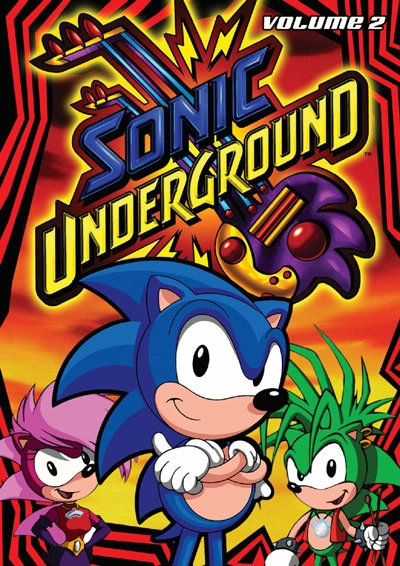
DVD (North America): Shout! Factory and Vivendi released the series in two volumes, on 18 December 2007 and 17 June 2008, 20 episodes each, with a bonus CD of eight songs in each set; Volume 1 also has interviews with Robby London and Mike Piccirillo, an animatic of the opening and concept art. NCircle Entertainment followed with six single discs of four episodes each (2007–2010) and Sonic Underground: The Complete Series on four discs on 25 July 2023.
DVD (UK): Anchor Bay released individual volumes from 31 May 2004 and a ten-disc box set in October 2004.
The full release table is on the episode guide. Streaming services come and go; the YouTube uploads are the dependable option.
Reception
Critics have never been kind to Sonic Underground, though the songs have their fans. Reviewing the DVDs for DVD Talk, David Cornelius admired the cleverness of the new backstory but found the episodes themselves uninspired, while noting the small, loyal following the show won. In Wired, Susan Arendt found the songs surprisingly catchy but thought instruments that double as weapons were a stretch.
Others were harsher. GamesRadar put the series on its list of the worst Sonic moments, blaming the extra characters and the tangled plot, and Patrick Lee of The A.V. Club called it a misfire made of ideas that did not belong together. Common Sense Media was gentler, praising the low violence while warning that younger children might struggle with the story.
Comics, Games & Cameos
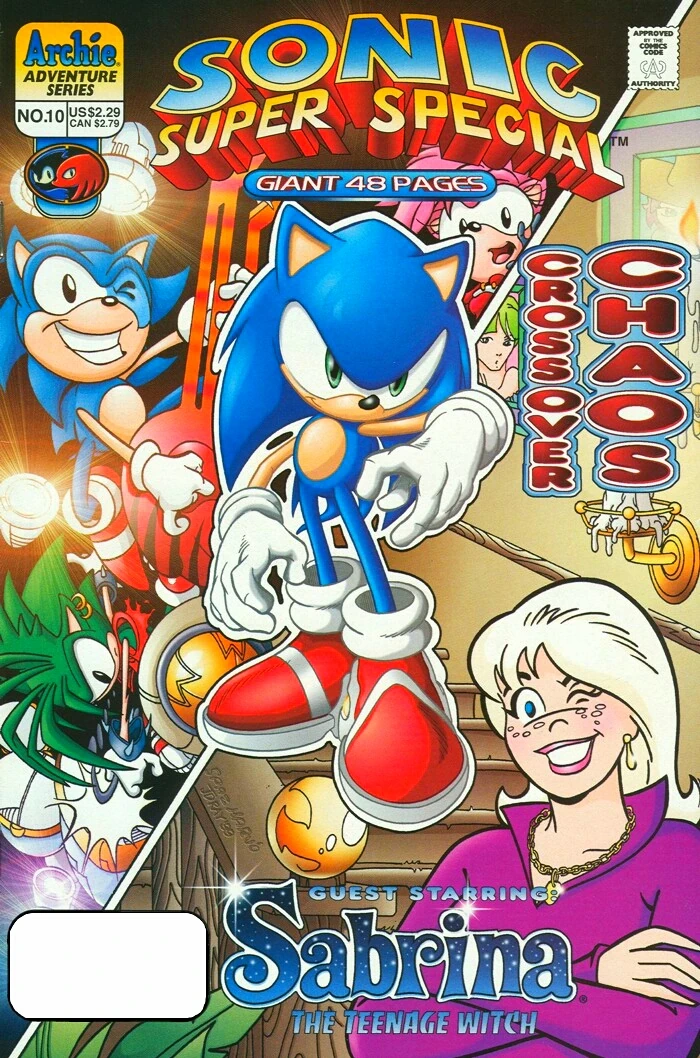
- Archie Comics, 1999: Sonic Super Special #10, “Zone Wars”, written by Mike Gallagher and Karl Bollers, takes Archie’s Sonic into the Sonic Underground world, where he meets the siblings, Sleet, Dingo and that universe’s Robotnik.
- Archie Comics, 2004: a poster in Amy’s room in Sonic the Hedgehog #144 advertises a Sonic Underground “inter-dimensional tour”.
- The lost epilogue: Sonic Universe #50 was announced in 2012 as the official ending to Sonic Underground, but it was replaced by a Metal Sonic story (see the prophecy).
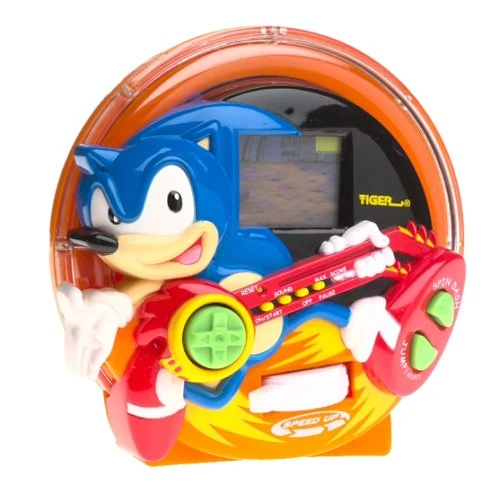
- LCD game: a Sonic Underground handheld LCD game was released in 2000 with the same basic story as the show.
- Sonic & Sega All-Stars Racing (2010): Sonia’s face appears on a Queen of Diamonds card on the Roulette Road track in the Wii and PC versions. The art was based on fan art, and Sumo Digital apologised.
 The Sonic Underground LCD game (2000)
Trivia
- The siblings are triplets, but Sonic is treated as the eldest and Manic as the youngest.
- Queen Aleena opens most episodes with a short narration about the prophecy.
- Robotnik’s capital, Mobotropolis renamed Robotropolis, is also SatAM’s; so is the name of his robot army, though the Swatbots look completely different.
- Sega of Japan’s approvals reportedly sent DiC back to give the characters five fingers instead of four.
- WildBrain’s uploads number the episodes 101 to 140, the same production order Luke used in his original guide.
- The French title, Sonic le Rebelle, means “Sonic the Rebel”.
More Sonic Cartoons on Sonic Scene
- Sonic Underground: the complete episode guide – all 40 synopses, air dates, story arcs and DVDs.
- Sonic the Hedgehog (SatAM) – DiC’s 1993–1994 series, with episode guides for both seasons.
- All Sonic cartoons – from Adventures of Sonic the Hedgehog to Sonic Boom.
Sources
Facts on this page were checked against these sources in November 2026. Where they disagree we say so.
- Luke’s original Sonic Scene guide to Sonic Underground (2017): all 40 titles, songs, writers and US and French air dates.
- Wikipedia: Sonic Underground: episode list with French titles and production numbers, broadcast, cast and home-media sections, and the references they cite.
- Sonic Wiki Zone: Sonic Underground: singing cast, the Archie epilogue (with Ian Flynn’s statements) and the LCD game.
- Sonic Wiki Zone: Sonia the Hedgehog, Manic the Hedgehog, Queen Aleena Hedgehog, Council of Four and Medallion (Sonic Underground): referenced comic appearances, the All-Stars Racing card and the medallions’ powers.
- Sonic Wiki Zone: Sonic Super Special #10 (Archie, July 1999) and Sonic the Hedgehog #144 (December 2004).
- Sonic Retro: “Sonic Underground To Be Finished…In Comic Form” (October 2012; Wayback copy): the Sonic Universe #50 epilogue announcement.
- Sonic Retro: Sonic Underground (Wayback copy, December 2024): air dates, voice actors, syndication and official uploads.
- Behind the Voice Actors: Sonic Underground (Wayback copy, 2021): voice cast.
- Saturday Morning Sonic: Ben Hurst on SatAM (Wayback copy), Hurst’s account of writing for DiC, as cited by Wikipedia.
- Hong Ying Animation: works list (Wayback copy, 2007).
- Shout! Factory store: Sonic Underground Volume 1 (Wayback copy, December 2007).
- NCircle Entertainment: Sonic Underground – The Complete Series (Wayback copy, 2023).
- Anchor Bay UK: Sonic Underground box set (Wayback copy, 2004).
- DVD Talk review by David Cornelius (Wayback copy).
- Wired: Sonic Underground now available on DVD (Susan Arendt, December 2007; Wayback copy).
- The A.V. Club: A hedgehog for all seasons (Patrick Lee; Wayback copy).
- Common Sense Media review (Emily Ashby; Wayback copy).
- GamesRadar: The absolute worst Sonic moments (Wayback copy).
- WildBrain’s official YouTube uploads: Sonic The Hedgehog – WildBrain and WildBrain Hero Tower (episode numbers 101–140; checked 6 November 2026).
- Title cards, screenshots, storyboards and character art: Sonic Wiki Zone galleries, copied to the Sonic Scene media library.