A Sonic puzzle game that never sat on a shop shelf. It came down a telephone line to Japanese Mega Drives in 1991, disappeared with the service that delivered it, and only reached fans when Sega sold it again in 2004.
Released1991 (Japan, by download)
DeveloperSega (CS1)
Delivered bySega Game Toshokan over the Mega Modem
Players1 or 2
ModesRound, Normal, Doubt, Block
RediscoveredFebruary 2004
Title
Sonic Eraser Japan: ソニックイレイザー (Sonikku Ireizā)
Platform
Sega Mega Drive, with the Mega Modem and the Sega Game Toshokan cartridge (Japan); PC download in 2004
Developer
Sega CS1 (our original page: Sega)
Publisher
Sega
Credits
Producer Taka Oh; program Op #1; design Rouly; music Bosanova Oyz (in-game nicknames)
Special thanks
BigIsland, Osamu, Noisy Pad, Chiesama, Iiyo
Genre
Falling-block puzzle
Players
1 or 2
Released (Japan)
1991, as a Sega Game Toshokan download (subscription: ¥4,800 for six months)
Re-released
2004, Sega Game Honpo PC download service (Japan; Windows 98 to XP)
Never released
Outside Japan, on cartridge or in a box
ROM
256 kB
Overview
Sonic Eraser is the Sonic game that almost nobody played. Sega made it in 1991, the year Sonic was born, as a falling-block puzzle game for the Mega Drive, and then released it in the most exclusive way possible: as a download for Japanese owners of the Mega Modem who subscribed to Sega Game Toshokan, the console’s game-by-phone service.
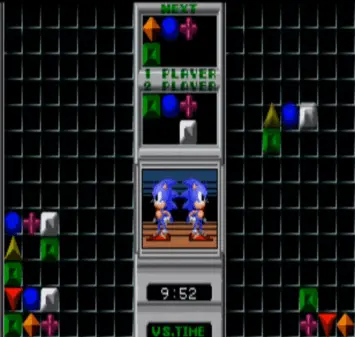
The game itself is simple and quick. Clusters of coloured shapes drop onto the board, and any two matching shapes that touch disappear, so the trick is to keep the pile from reaching the top. There are four rule sets, a forty-stage puzzle mode, and a two-player battle in which Sonic launches an attack on the other player’s board.
When the service closed, the game went with it. The Sonic community only learned it existed in 2004, after Sega of Japan put it on sale again for Windows PCs, a fan bought a copy and the Sonic hacking scene cracked it open. That rescue is why Sonic Eraser is playable today.
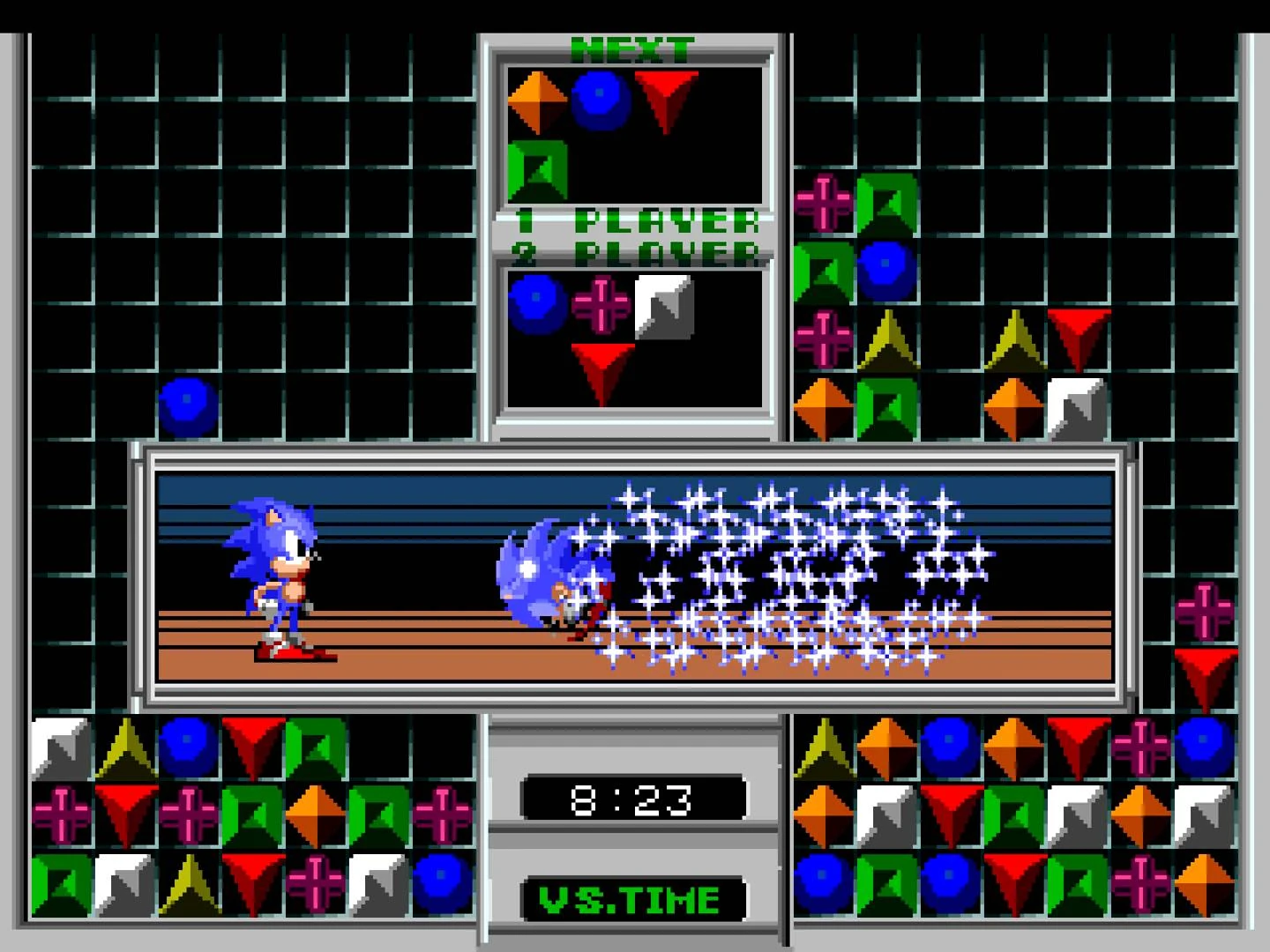
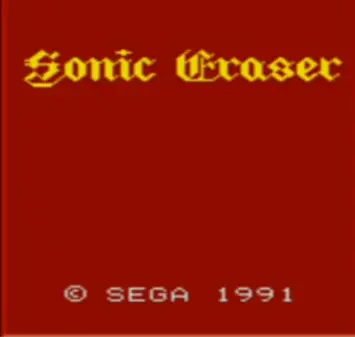
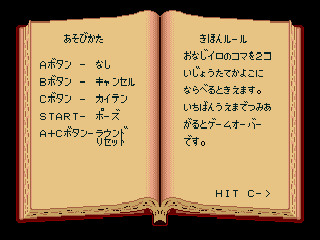
Clearing the board.An open book on screen.Two Sonics, two boards.
“Sonic, the hero of Sonic the Hedgehog, appears in a puzzle game!”
That is how Sega’s own download shop introduced it in 2004. The page went on to promise the thrill of clearing blocks by lining up just two of a kind, a high-speed puzzle game, four single-player modes with different rules, and a versus battle in which Sonic’s attack, it said, was a must-see.
— Official description: Sega Game Honpo product page for “Sonic Eraser” (Sega Music Networks, 2004), archived by the Wayback Machine. Translated from Japanese by Sonic Scene; one line quoted, the rest summarised.
Quick Answers
The short answers, with the detail further down the page.
When did Sonic Eraser come out?
In 1991, in Japan only, as a download through Sega Game Toshokan. The exact date is not recorded. More →
Was it ever sold on a cartridge?
No. It was only ever a download, first to the Mega Drive by modem and in 2004 to Windows PCs. The boxes and cartridges you may see online are fan-made. More →
How do you play?
Clear falling clusters of shapes by matching two of the same kind, and stop the pile reaching the top. More →
How was it preserved?
A fan bought it from Sega of Japan’s PC download service in February 2004, a hacker unscrambled the files, and the original Mega Drive game was extracted and shared. More →
Is it in any Sonic compilation?
No. It was planned for Sonic Gems Collection, whose files still name it, but it was cut. More →
Is there an English version?
Only a fan translation, by a translator known as D, made soon after the game resurfaced. More →
Plot / Story
Sonic beside the board, in the fan translation.
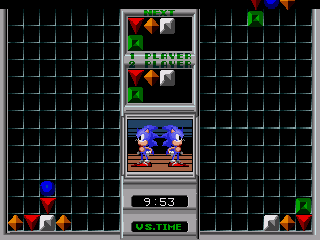
There is no story to speak of. No Robotnik scheme, no Chaos Emeralds and no zones: just Sonic, a board and a steady rain of shapes. The pieces are simple 3D solids in bright colours, among them red and yellow pyramids, pink crosses, green and white gems, orange octahedrons and blue spheres, falling in clusters onto the grid.
Line up two of the same and they vanish, and anything above drops into the gap, which is where the chain reactions come from. Let the stack touch the top row and the game is over. Sega’s own description put the fun down to how satisfying it is to clear a pair, and promised a fast game.
Sonic versus Sonic
In the versus mode each player has a board and a Sonic. Clear five or more blocks in one go and you drop mystery “?” blocks on your rival, whose contents stay hidden until they land. Clear seven or more and your Sonic springs into an attack, and for a short while you get to steer your opponent’s pieces as well as your own.
There is also a 1P and 2P mode, a kind of side-by-side solo play in which each player can even pick a different rule set and simply chase the bigger score.
Two players.Racing to clear.In play.
The four rule sets
Every mode can be played alone or by two players at once.
Round Mode40 stages · 3 minutes eachA puzzle mode. Spiral pieces are set into each layout and must all be cleared by removing the shapes around them. The clock keeps running even when the game is paused.
Normal ModeEndlessPlay for points for as long as you last. The better you do, the higher the level and the faster the clusters fall.
Doubt ModeLie blocksWhite blocks never fall on their own; instead a piece of almost every cluster turns into a white “lie” block as it lands.
Block ModeTowersClusters stay stuck together, standing on end instead of breaking apart, until one of their blocks is cleared. Build high and a single pair can bring the lot down.
In comics, TV & other media
Sonic Eraser is too obscure to have been picked up by the comics or cartoons, but it has a few relatives. More in Sonic in other movies and media.
Dr. Robotnik’s Mean Bean MachineMega Drive · 1993A later Sonic-branded falling-block game, a Puyo Puyo conversion that was sold in shops in the West.
Sega Music Collection: Sonic the HedgehogGame Toshokan · 1991The only other Sonic release on the service: a download of music from the first game.
Sonic Gems CollectionGameCube and PS2 · 2005Sega planned to include Sonic Eraser in this compilation; its name and title graphic are still in the files.
Characters
A one-hedgehog cast.
Character
Who they are
In this game
Stats & abilities
Sonic the HedgehogThe only character
The star of Sega’s new platform game, borrowed for a puzzle game in the same year.
Stands beside the board as your mascot. In versus play each player has a Sonic, and a big enough clear triggers his attack on the other side.
Attack on a clear of seven or more
Takes over the rival’s pieces for a moment
The pieces
The shapes you are clearing, as Wikipedia’s list of Sonic games describes them.
PyramidsRed and yellowFour-sided tetrahedrons.
CrossPinkA chunky plus sign.
GemsGreen and whiteCut gemstones.
OctahedronOrangeEight-sided diamonds.
SphereBlueA plain blue ball.
? blockVersusSent by your rival; you only find out what it is when it lands.
The people who made it
The in-game credits use nicknames only, as listed by Sega Retro.
Sega CS1DeveloperOne of Sega’s in-house development teams.
Taka OhProducerCredited as producer.
Op #1ProgramCredited for the programming.
RoulyDesignCredited for the design.
Bosanova OyzSongCredited for the music.
BigIsland, Osamu, Noisy Pad, Chiesama, IiyoSpecial thanksThanked in the credits.
How it was made
Our original page had no history section. This one covers how the game was delivered in 1991, and how it was saved.
Games by telephone
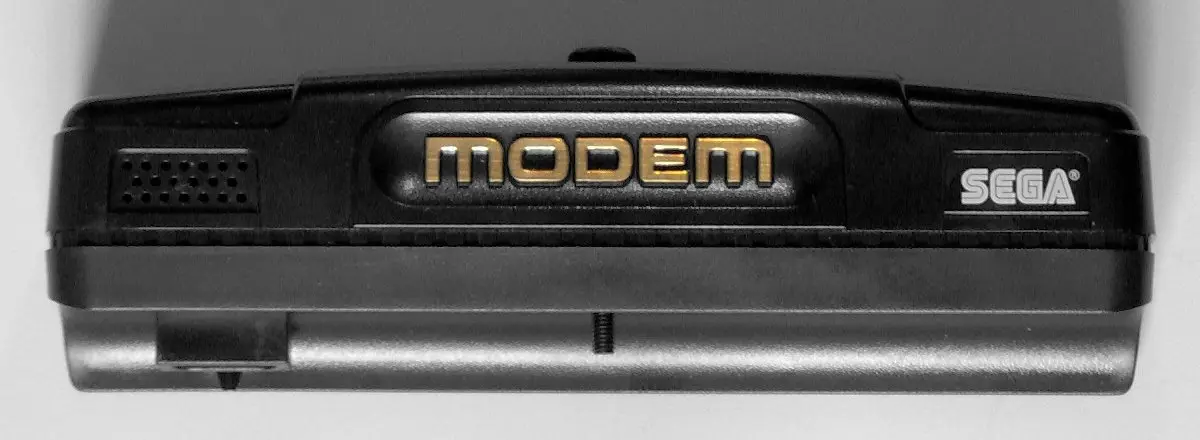
The Mega Modem.Image via Sega Retro
In November 1990 Sega launched Sega Game Toshokan, the Sega Game Library, in Japan. You needed the Mega Modem, which plugged into a port on the back of the original Mega Drive, the special Game Toshokan cartridge that came with some modems, and a subscription of ¥4,800 for six months. Games then arrived over the phone line.
The modem ran at just 1,200 baud and downloads were held in the console’s own memory, so everything on the service had to be tiny. Sonic Eraser was one of a few dozen titles released this way between 1990 and 1992, and the only Sonic game among them; a Sonic music collection was the only other Sonic item.
Gone with the service
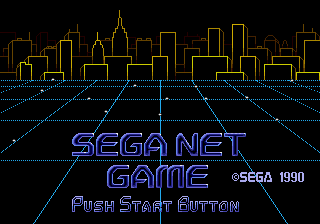
The Game Toshokan title screen.Image via Sega Retro
The paid service ended in September 1992, when it reportedly had about 3,500 subscribers, though it may have run for free into 1993. Downloads lived only in the console’s memory, so when the servers shut, the games went with them. Sega Retro still marks every game that was exclusive to the service as lost.
The 2004 rescue
Sonic Eraser came back in 2004 through Sega Game Honpo, a Sega of Japan service that rented old Mega Drive games for Windows PCs between November 2003 and September 2006. Its product page listed the game at about 3 MB, roughly a minute to download on a 1 Mbps line, for Windows 98, Me, 2000 or XP.
Getting the game out of that package took the Sonic hacking scene. Sega shipped each title as an encrypted, self-contained disc image that only its own player, a licensed build of the Gens emulator, would open. The copy that mattered was bought in February 2004 by Phugolz, owner of the fan site Sonic CulT, along with several other games from the service. The hacker Nemesis wrote a tool that turned the scrambled images into ordinary ISO files, the original Mega Drive ROM was lifted straight out, and Sonic CulT shared it and documented the game. Almost immediately a translator known as D produced an English version.
Firsts: what this game introduced
What Sonic Eraser brought to the series.
1Sonic by modemThe only Sonic game on Sega Game Toshokan, delivered over a phone line years before the Sega Channel.
2Match two, not threePairs are enough to clear a block, a much quicker rhythm than the three or four other falling-block games ask for.
3Sonic on the attackIn versus play a big clear unleashes Sonic’s attack, and for a moment you control the rival’s pieces.
Glitches, exploits and oddities
Sonic Retro lists no bugs. These are the game’s oddities.
The pause button lies
In Round Mode the three-minute clock keeps ticking when you pause, so pausing only costs you time.
Same answers every time
The forty Round Mode puzzles always have the same solutions, so once you know a layout you know how to beat it.
A SegaNet logo inside
The ROM contains compressed graphics of a SEGANET logo and a copyright line reading Sega 1990 1991 1992.
A box that never existed
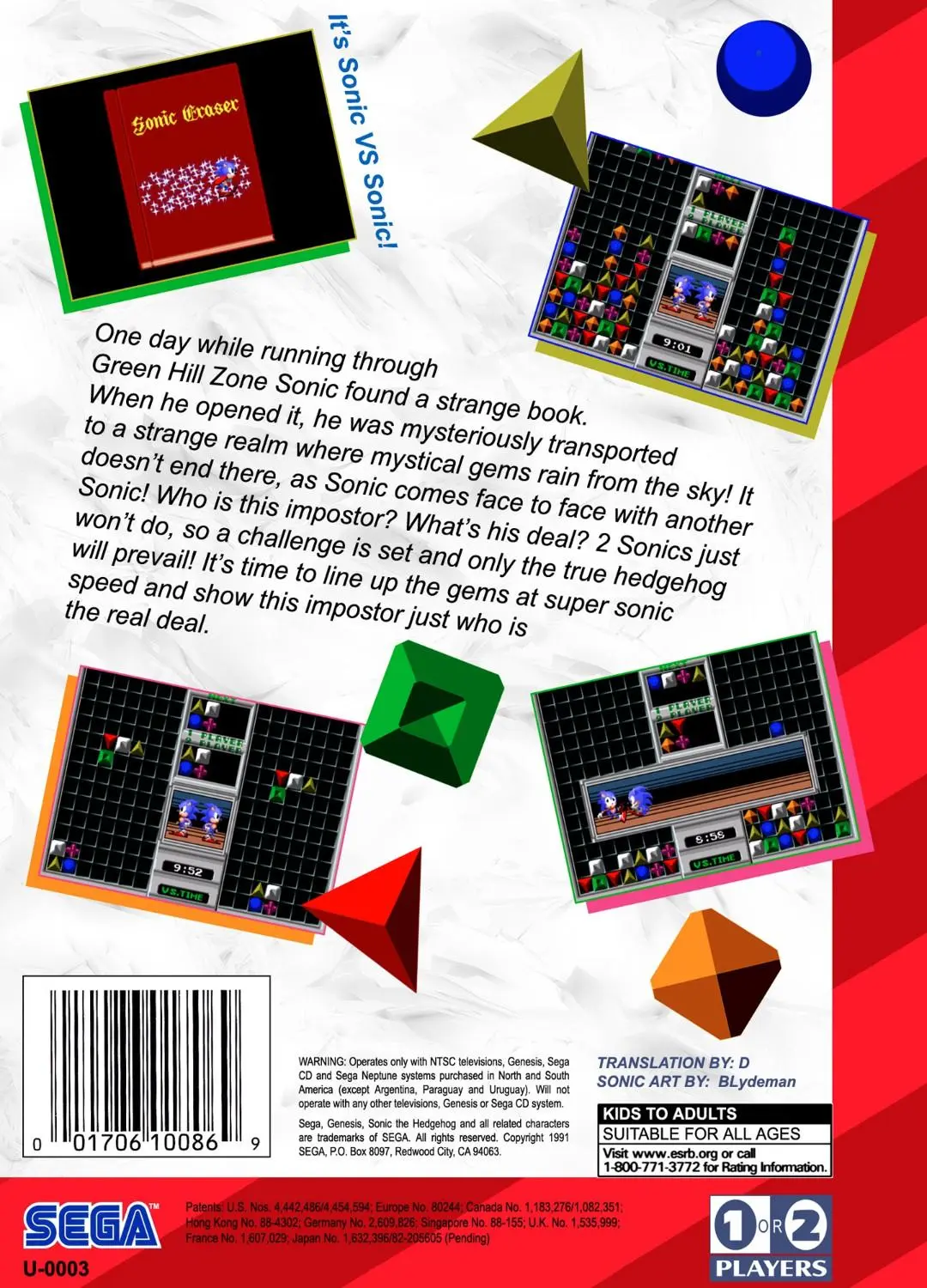
A fan-made cover.
Sega never sold Sonic Eraser in a box or on a cartridge, but fans have made their own covers, and unofficial reproduction cartridges have been made too. The ones in our own box art gallery are of this kind.
Videos & media
A longplay of the game, and a review from the Sonic YouTuber redhotsonic.
A longplay by Seamus Felder.
A review by redhotsonic.
Trivia & facts
The Game Toshokan box.Image via Sega RetroThe Mega Modem only fits the first model of Mega Drive, because later models dropped the port on the back it plugs into.
A Game Toshokan subscription worked out at ¥800 a month.
Sega’s 2004 release weighed about 3 MB to download, for a game whose ROM is just 256 kB; the rest was the packaging and the emulator.
Sega Game Honpo advised users to eject each game from a virtual CD-ROM drive when they had finished, a hint at how the downloads were packaged.
Use an Action Replay on Sonic Gems Collection for GameCube and the menu will show Sonic Eraser’s name and title graphic, marked with an orange-red MD icon.
Sonic Retro’s ROM table gives the 2004 copy a build date of October 1989.
Legacy
For a game hardly anyone saw in 1991, Sonic Eraser has become a minor legend among Sonic collectors and preservationists.
Releases
Sega Game Toshokan (Japan)1991 – Mega Drive download via the Mega Modem.
Sega Game Honpo (Japan)2004 – Windows PC download.
Sonic Gems Collection2005 – Planned, then cut; the name survives in the files.
A preservation success
Sega Retro lists all seven of the service’s exclusives as lost, from the five Kinetic Connection titles to Taiketsu! Columns. Sonic Eraser escaped that fate only because Sega itself sold it again thirteen years later and a fan happened to buy a copy. Since then it has been translated by fans and documented in detail.
Sales & reviews
Sales and reviews
No download figures or period reviews have been found, which is no surprise for a game sold only to Mega Modem subscribers in Japan.
4Rule sets
40Round Mode puzzles
¥4,800Six months of Game Toshokan
256 kBSize of the ROM
Reader reviews
No reader reviews yet. Played it? Give it a score out of 10 and tell other fans what you think.
Screenshots from Sonic Scene’s own gallery and Sonic Wiki Zone, Game Toshokan hardware from Sega Retro, and the fan-made covers in our box art gallery. Select any image to view it larger.
Title screen.Fan-translated to English.Two players.Clearing shapes.Two boards.An open book on screen.Two Sonics.In play.In play.In play.In play.SegaNET Game title screen.The Game Toshokan cartridge.A fan-made back cover.An unofficial reproduction cartridge.
Every fact on this page was checked against the sources below. Sonic Retro and Sega Retro pages were read through Wayback Machine copies, because both live sites show a bot check; each link opens the copy we read. The 2004 Sega Game Honpo page is in Japanese and was translated by us.




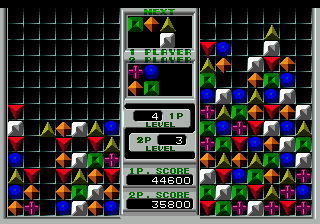
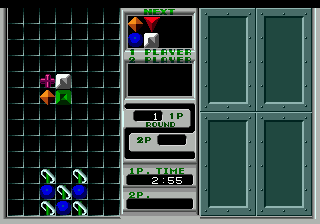 Round Mode40 stages · 3 minutes eachA puzzle mode. Spiral pieces are set into each layout and must all be cleared by removing the shapes around them. The clock keeps running even when the game is paused.
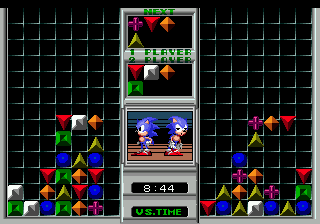 Normal ModeEndlessPlay for points for as long as you last. The better you do, the higher the level and the faster the clusters fall.
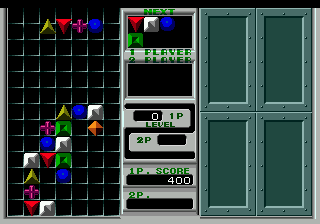 Doubt ModeLie blocksWhite blocks never fall on their own; instead a piece of almost every cluster turns into a white “lie” block as it lands.
 Block ModeTowersClusters stay stuck together, standing on end instead of breaking apart, until one of their blocks is cleared. Build high and a single pair can bring the lot down.